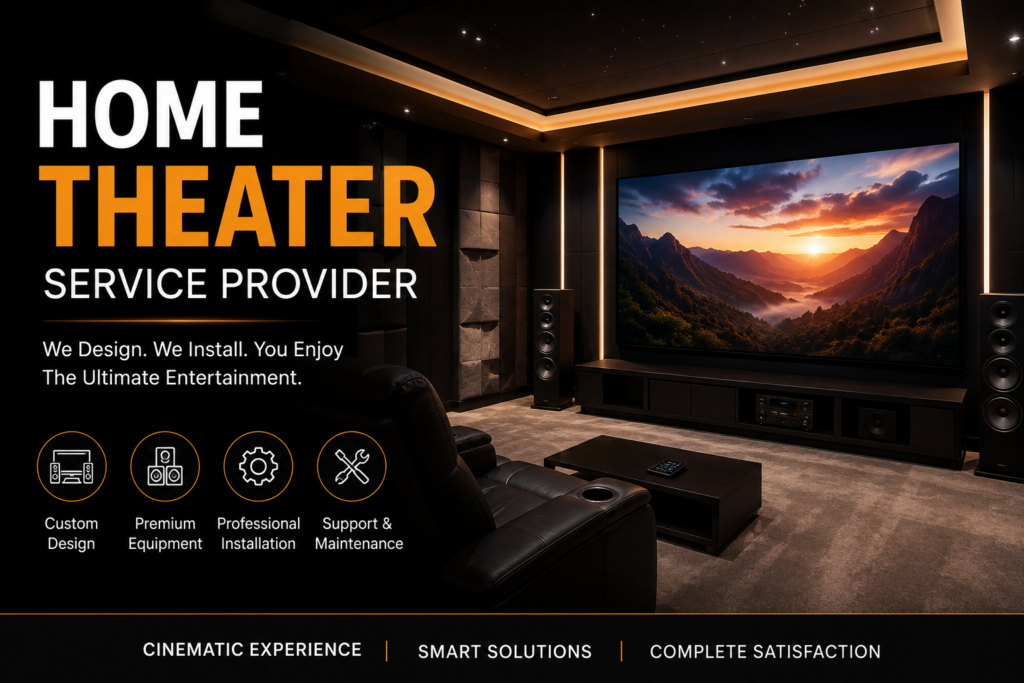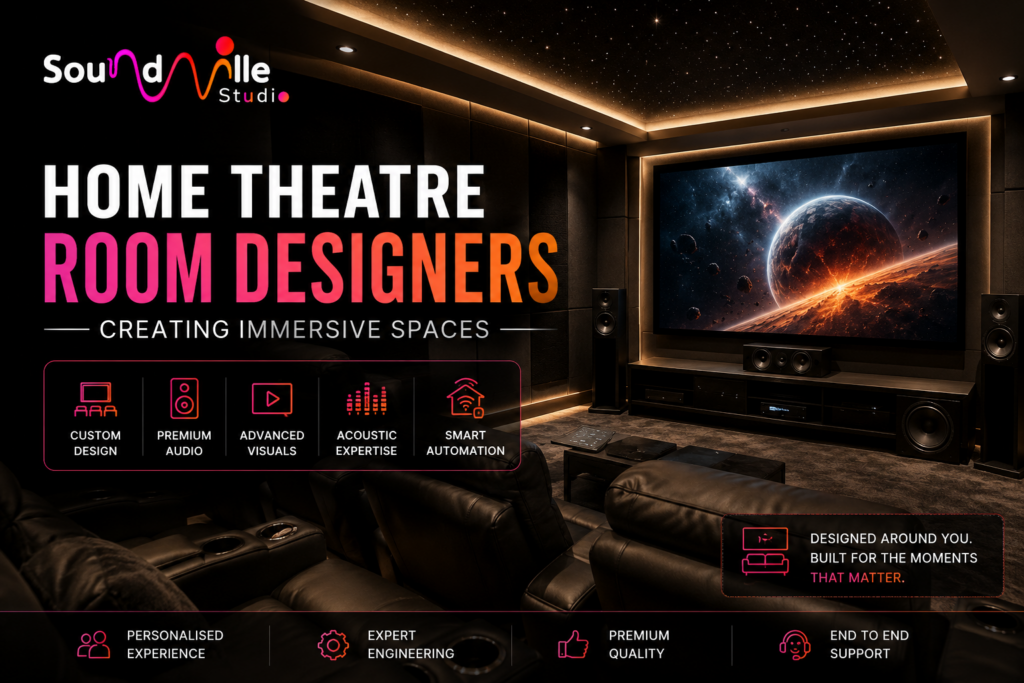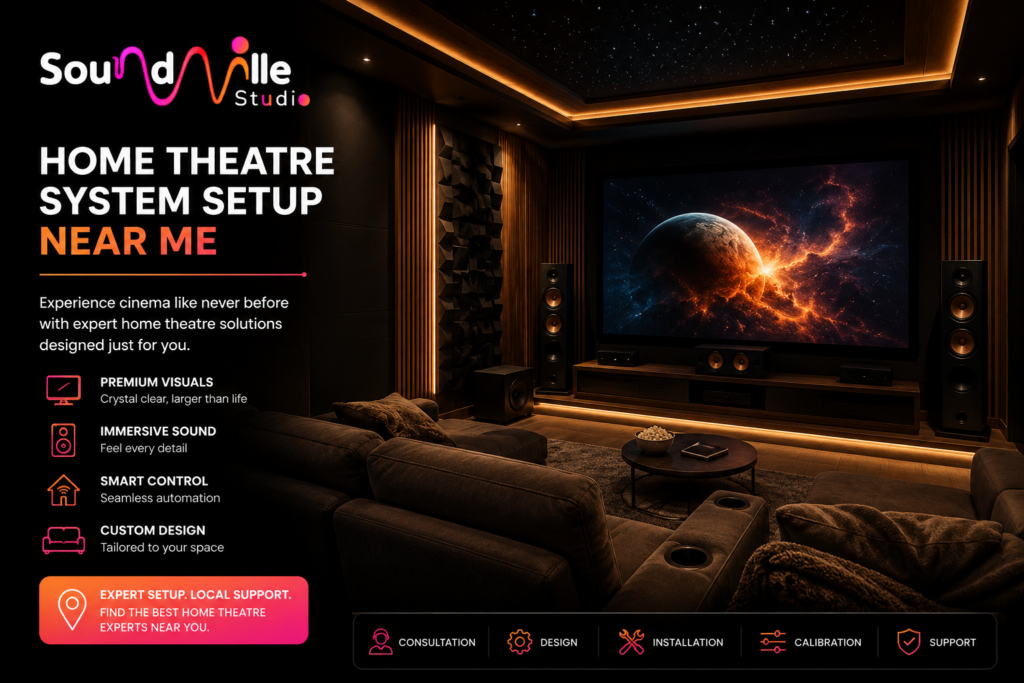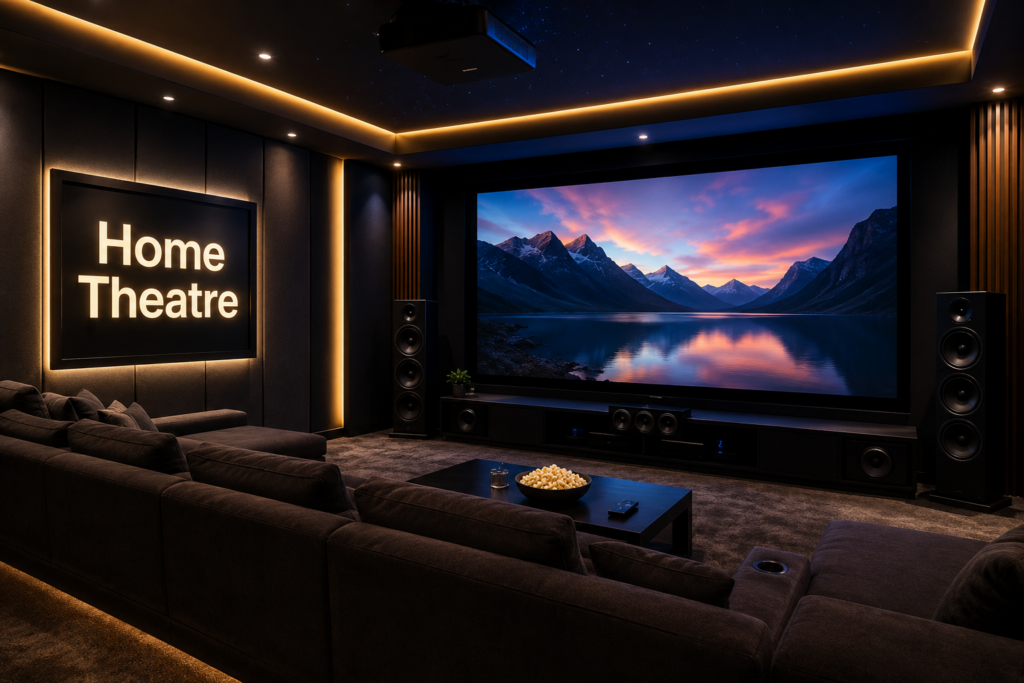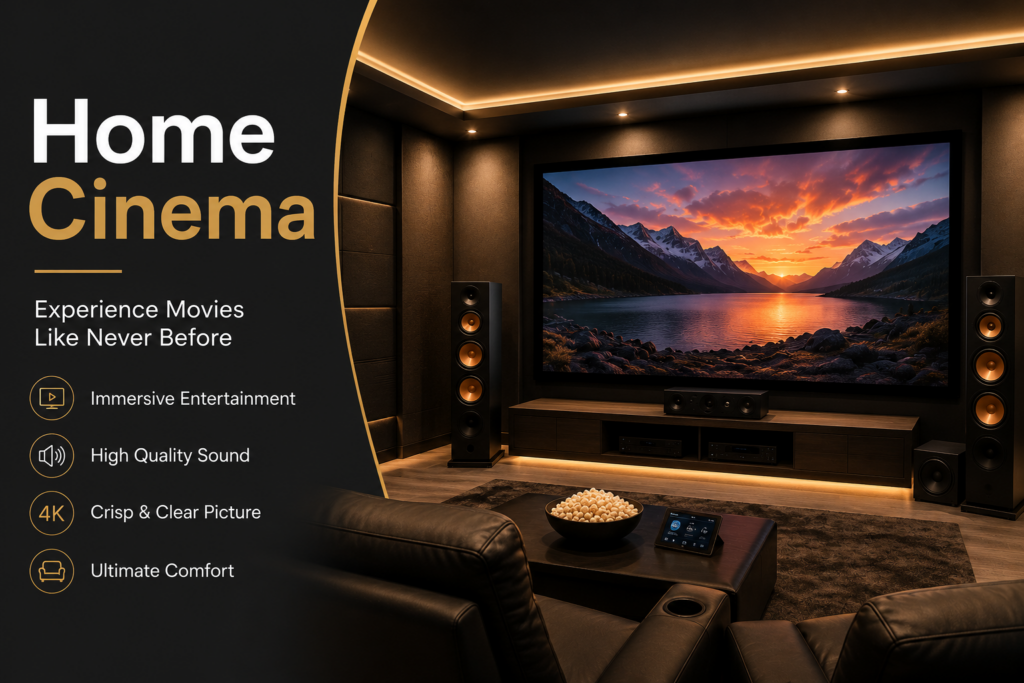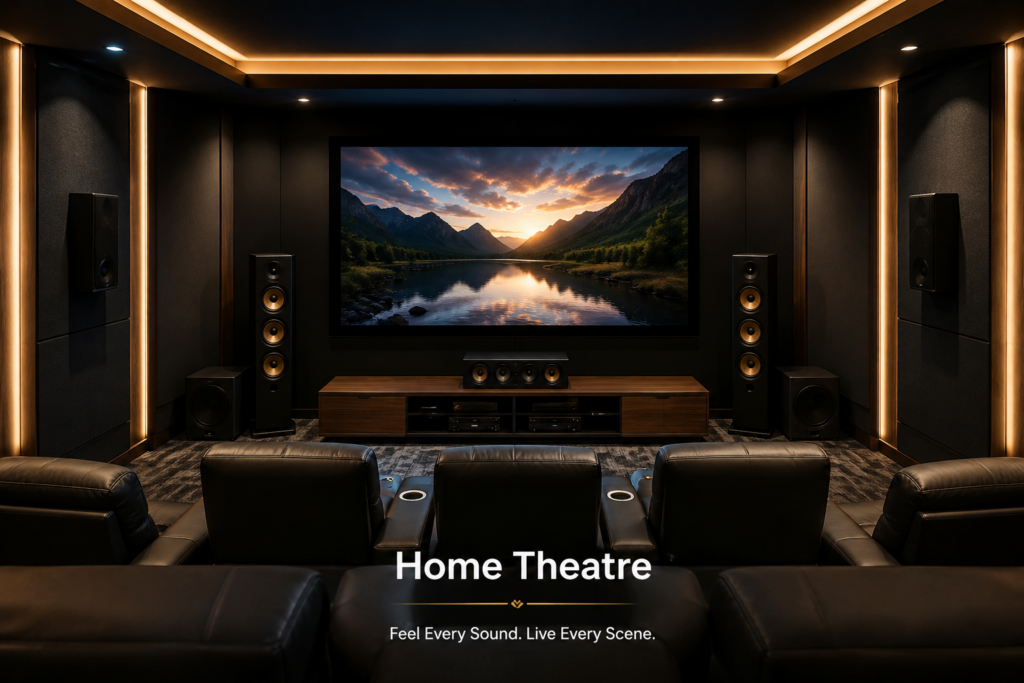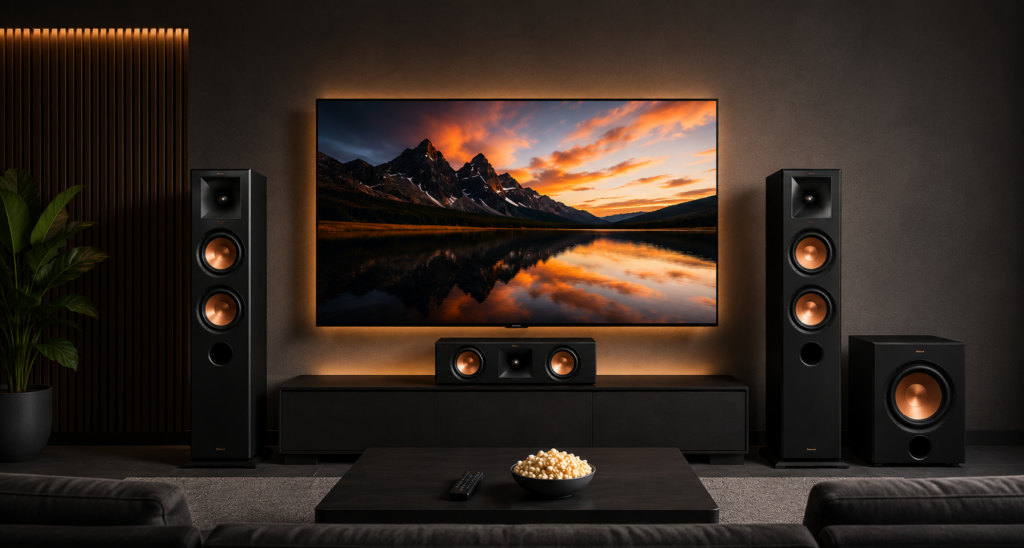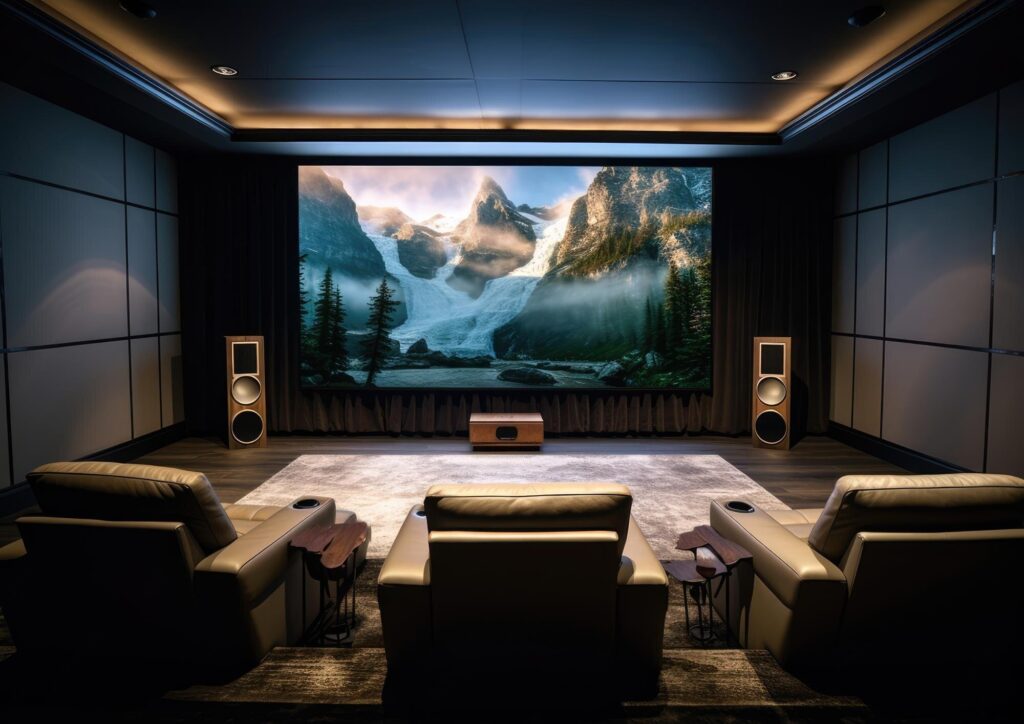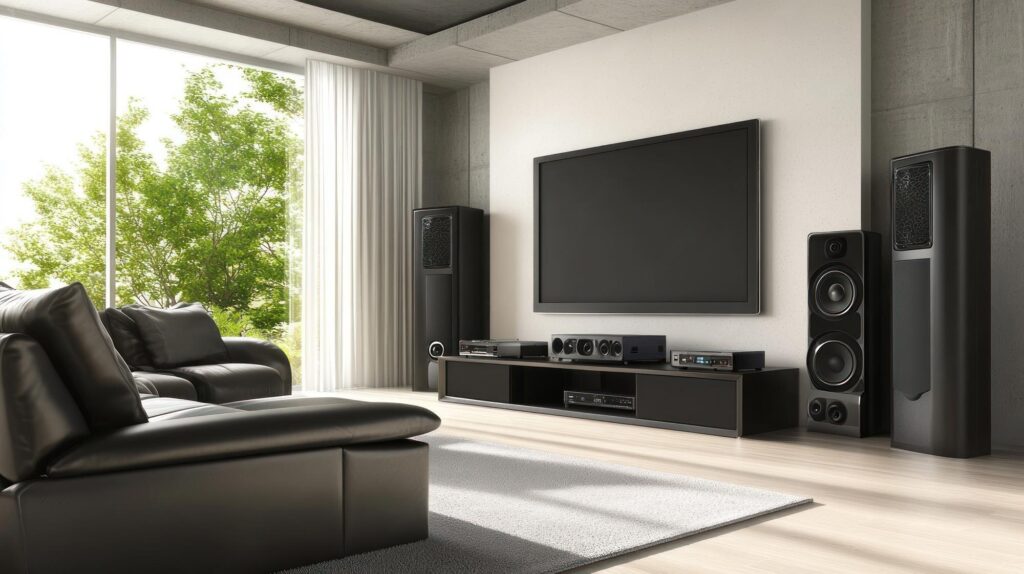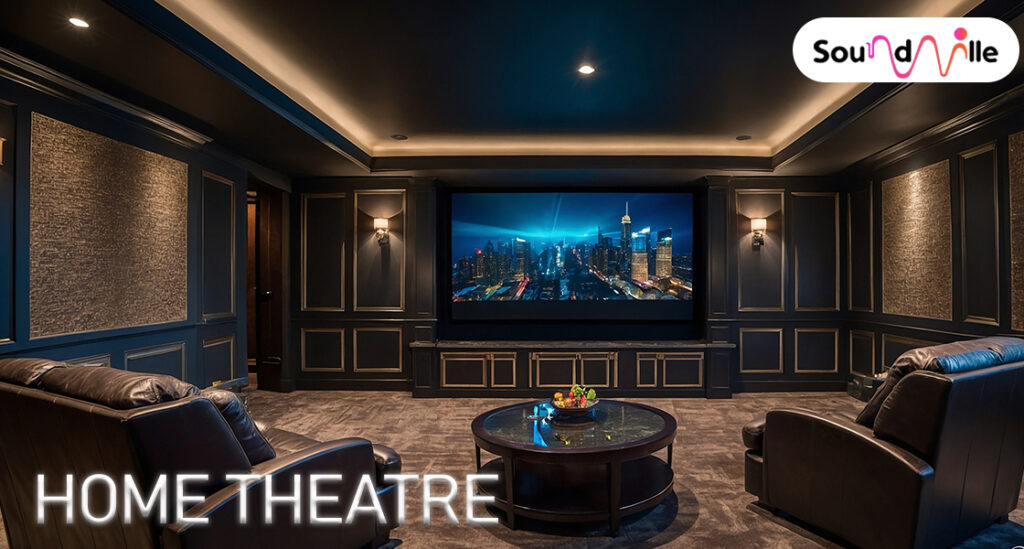

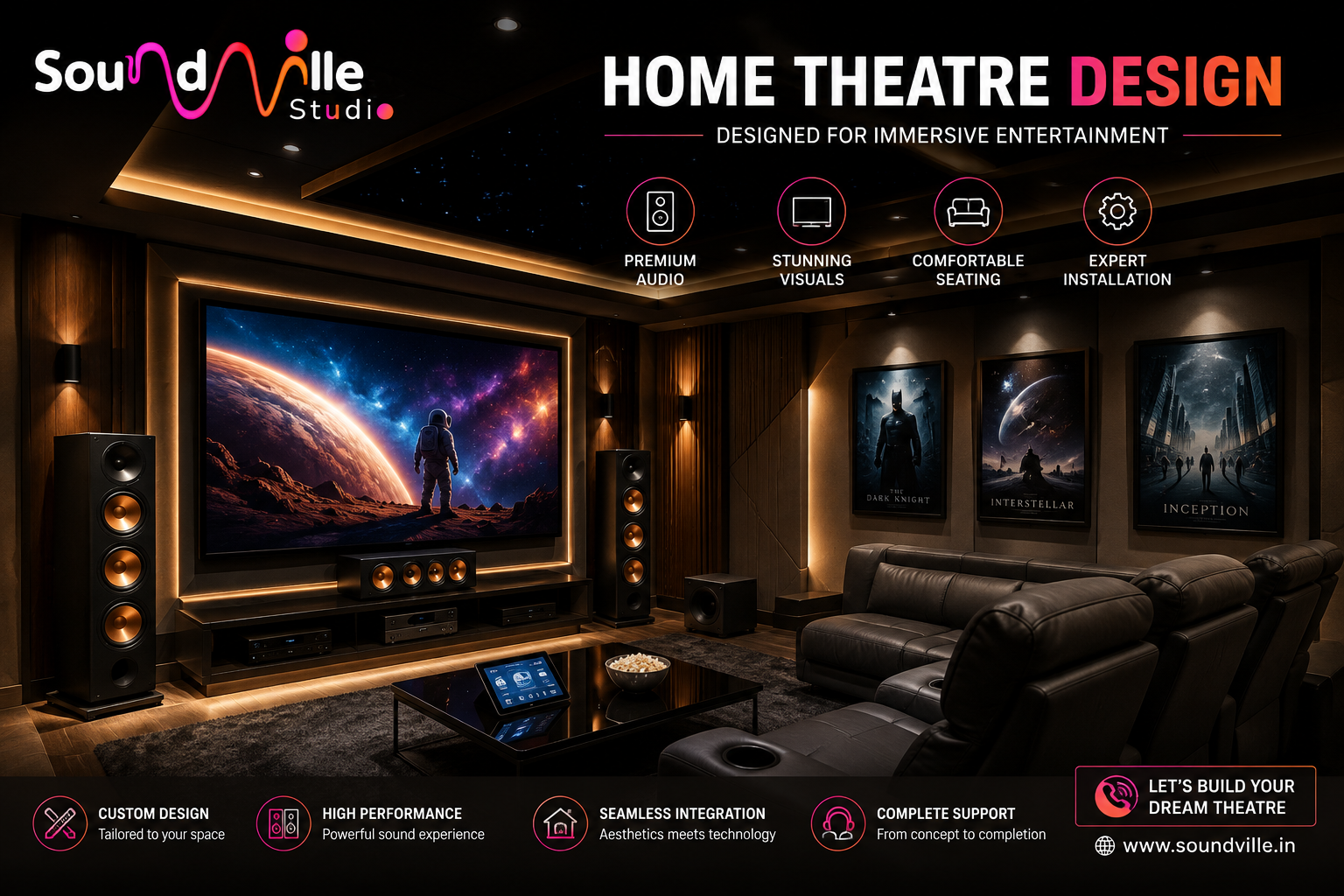
Modern homes aren’t just meant to be functional or comfortable, today they are also made to offer stellar entertainment too. One of the best things modern homes can offer is the expertise of Home Theatre Design .So if it’s movies, big games, Sports TV, Netflix & Chill, then a well designed and executed home theater could change how you view these events all together.Unlike a flat television mounted on the wall, looks holistically at the space – room lay-out, acoustics of the room, lighting design of your lounge, and seating to be provided and position for sound delivery from speakers – all contributing to provide cinematic results in our own homes.A home theater also contributes elegance, ease, luxury and longevity to a home. With, your home can transform into your personal entertainment area with the help of our Home Theatre Design solutions that suit your aesthetic preferences and lifestyle perfectly.
Complete Guide
Home Theatre Design is the ultimate planning and positioning of dedicated entertainment spaces that integrate superior sound, vibrant picture quality, acoustics, lighting, seating and smart home technology into an unmatched home entertainment. It is not just installation of a TV set and speaker-this kind of design is concerned with the ultimate goal; to provide guests with an entertaining movie-going experience without it feeling separate from the home’s existing aesthetic.A proper home theatre design will take every element into consideration to achieve optimal performance and long-term comfort for guests. Ideally, room layouts are tailored to optimized viewing angles and audio delivery, taking into account the position of speakers relative to seating. Whether the home theatre setup is confined to a devoted theatre room or spread throughout an interior living area, both the functionality and appearance of the space are enhanced.
A Home Theatre Design is one that accounts for:
- Room Size and Layout
- Viewing Distance
- Screen or Projector Location
- Surround Speaker Placement
- Acoustic Treatment
- Ambient Lighting
- Seating Configuration
- Cooling and Venting
- Concealed Cabling
- Smart Controls/Automation
Taken together, these aspects enable a Home Theatre Design to provide vivid surround-sound and perfect pictures in a pleasing environment and also contribute to a well-finished and stylish room by concealing speaker wires and wires to home theatre equipment. Such design also create the most enjoyable atmosphere for experiencing movies, live performances, games, TV and other entertainment, also enhancing the look, feel, comfort and value of the entire home
Essential Components of Home Theatre Design
Every successful Home Theatre Design includes several important elements that work together.
| Component | Purpose |
| Room Layout | Creates balanced viewing and listening positions |
| Display Screen | Provides sharp, vibrant visuals |
| Surround Speakers | Produces immersive sound effects |
| AV Receiver | Controls and distributes audio signals |
| Acoustic Treatment | Improves sound clarity by reducing echo |
| Seating Arrangement | Ensures maximum comfort |
| Lighting Control | Creates a theatre-like atmosphere |
| Cable Management | Keeps installation clean and organized |
| Smart Automation | Simplifies operation of the entire system |
Choosing the Right Room
Room factors: How each choice may influence the home theater design Factors
- Room Size The bigger the room will accommodate more speakers and a larger display; smaller rooms necessitate a concise design.
- Room Shape
- The optimal room shape would be the rectangle, instead of the square, to better diffuse sound evenly throughout the Home Theatre Design space;
- if not the right shape for the optimal sound diffusion, acoustic paneling would fix most sound issues.
- The ideal height for a room with optimal sound reflexivity and best speaker placement for sound quality is balanced.
- The larger space of rooms allows a sound dampening effect and reduces ambient and exterior sounds, providing a more immersed experience.
Importance of Room Acoustics
Room acoustics are perhaps one of the most overlooked components when designing a Home Theatre Design. The way sound travels will depend on, among other things, the material of the walls, flooring, furnishings and ceiling. Planning acoustic treatment will often involve:
- Acoustic wall paneling
- Bass traps
- Curtains, for absorbing sound
- Carpet/Rug
- Ceiling treatment
These components will diminish echoes or reverberation, improving not only dialogue but also for surrounding sounds.
Display Selection for Home Theatre Design
For every entertainment room the biggest feature inside your media room is the display that you chose the most common screen options are:
- Large LED Television
- Good for medium to moderately bright room lighting
- OLED Display
- offers inky black levels, greater contrast ratio, best picture quality
- Laser Projector
- Best choice in full theater dedicated spaces with needed large screens.
- motorized projection screen
- Versatile, and helps you maintain a minimalistic design of room interior
Consideration Factors When Planning The Display What are the factors when you are deciding on the displays that we offer? What kind of screen are best for viewing distances, what are the best for your lighting conditions and what room space do you have available for the screen?
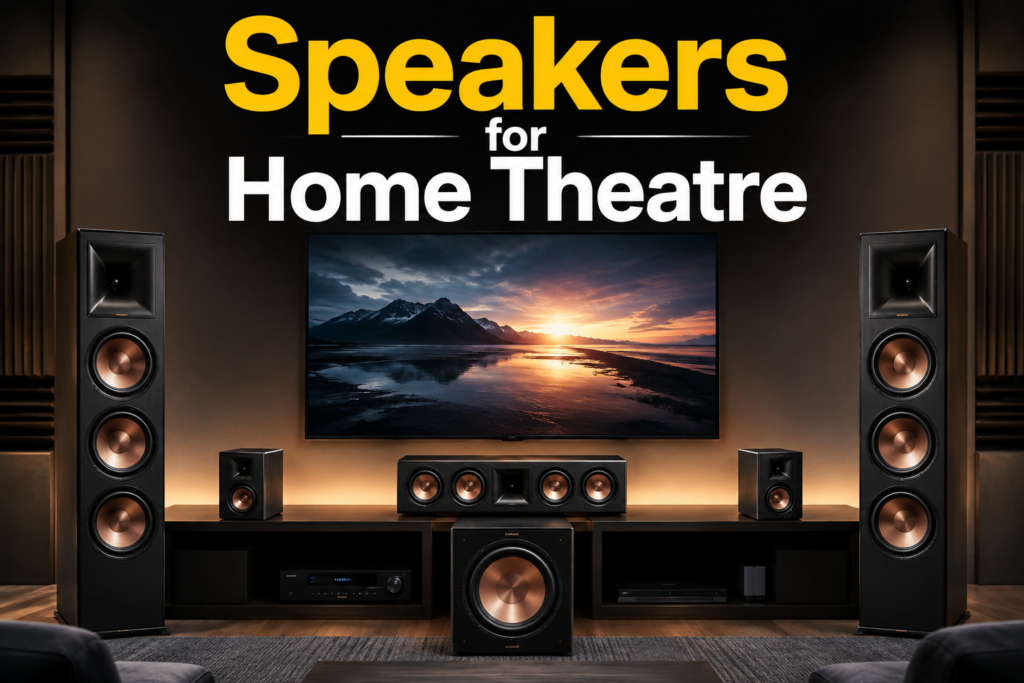
Speaker Placement Matters
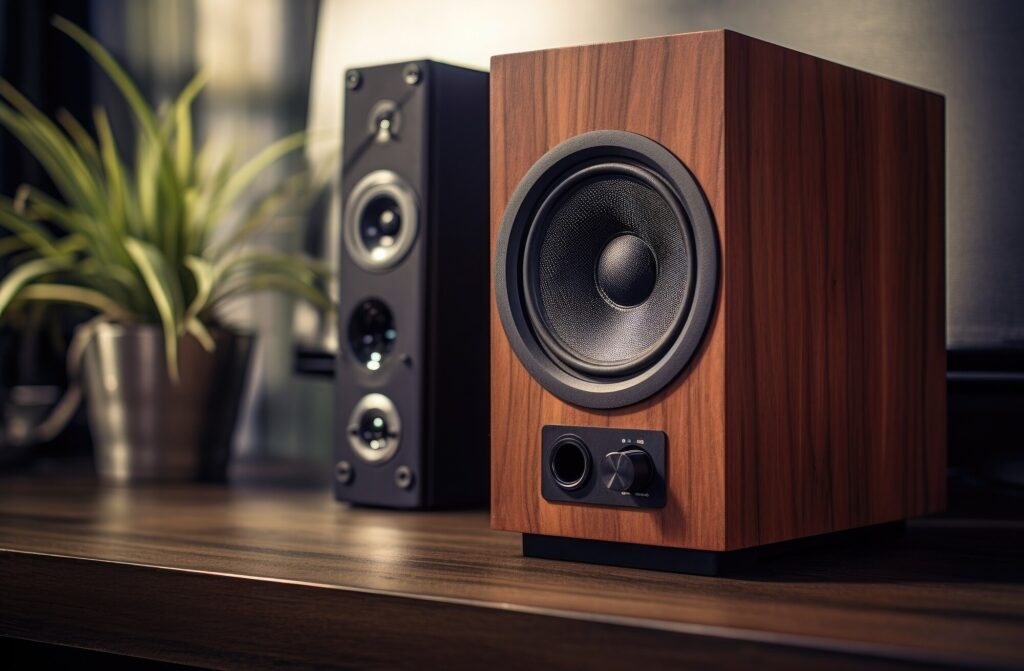
Speaker setup or placement in your living room makes a huge difference on your overall Home Theatre Design quality. You ensure consistent acoustics across the room with:-
- Good surround balance
- Clear and audible dialogues
- Good bass response
- seamless sound transmission across
Good level of realistic effects Components of the speaker configuration The usual speaker arrangement will consist:-
- front left
- centre speaker
- front right speaker
- surrounds
- rear speakers
- woofer/sub- woofer
ceiling speakers to support Dolby Atmos We shall then program the settings at their correct level and EQ each location at the same time giving everyone who wants to listen on to the same cinema quality listening experience no matter where they are sitting or standing in the room.
Lighting
Lighting contributes to better quality images Lighting to include in the setup is :
- Dimmable LED lights
- Cove lighting
- Wall lighting (sconces)
- Indirect ceiling lighting
Smart control for lights Having lighting which is not facing your screen will help with contrast and cut down on reflections.
Seating Arrangement
You can’t underestimate Home Theatre Design and comfort.
Seating should offer;
- A suitable view of the screen
- Support your back evenly
- Provide enough space for your legs
Have a sufficient distance from the screen - High-Quality Home Theatre seating could include:
- Reclining sofas
- Cup holders
- USB outlets
- Headrests
Powered seats.When there are multiple seating arrangements for home cinema setups of big rooms.
Smart Automation Features
Smart tech can now be part of your day-to-day with smart media room set ups. A typical modern Home Theatre Design might have: –
- Voice command – Smartphone controlling your home theater
- Remote for everything with your universal remote system
- Automatic motorized blinds
- Automatic sliding projection screen
- Environmental sensors
Integrated home lighting scenes You don’t need multiple remotes when automation does the work!
Interior Design Considerations
A Home Theatre Design setup must also blend with your interior.Some commonly used interior design accessories are:
- Wooden wall panels
- Fabric acoustic panels
- Expensive flooring
- Decorative designs on the ceiling
- Storage is hidden
- Floating cabinets
- Soothing lights in interiors
- High class finishes.
A clean interior always contributes to the richness of an entertainment room.
Common Mistakes to Avoid
Your large screen deserves planning! Lots of homeowners spend big bucks on gear while forgetting to put the pieces together correctly. Be smart
- avoid this homeowner blooper reel!
- The Dreaded Oversized Screens
- Are You Buying Way Too Much Screen for Your Space?
When You’re Placing Home Theatre Design Remember “The Golden Gate Principle” A Totally Baffling Overlook: Making Sure Your Room Acoustics Are Good Not Only Is More Light In a Room Better… More light! Room Ventilating, or Sticking Your Head Out the Window to get Air Too Much Wiring showing it works for you! Where to Place your Seating If you Want More Better Performance You Aren’t Planning for The Future (Or, Worse) How Professional Installations Save Money and Performance If not planning can cost you more and result in problems you need to avoid.
Benefits
The trends in the moment lie with technology and look.
- Innovative trends are:
- Dolby Atmos systems
- 8K displays
- Ultra-short throw projectors
- Wireless speakers
- AI integration automation
- Voice-controlled entertainment systems
- Concealed speaker systems
- Decorative acoustic wall panels
- Automated climate control
These developments aim to produce more realistic and easier entertainment rooms.
Home Theatre Design Trends
Benefit of professional installation over the long term;
- Better entertainment value
- Every movie is more enjoyable
- Better audio performance
- Precisely placed speaker to deliver authentic surround sound
- Better viewing comfort
- The screen is optimally placed to reduce eye strain
- Clean installation
- Concealed wiring to create a clutter-free appearance
- Energy efficiency
- Modern systems are more energy efficient.
- Long-term benefits
The installation is durable and will require less attention and cost to maintain
Maintenance Tips
A quality maintained Home Theatre Design will keep working perfectly for decades. There are key practices that can help you maintain it:
- Regularly clean screens
- dust speakers gently
- Keep vents clear
- Update the software on devices
- check cable connections
- service projectors as necessary
- Protect against moisture
- Employ surge protectors
Consistent maintenance will ensure both functionality and longevity.
Home Theatre Design Checklist
Before beginning your project, ensure the following:
| Checklist Item | Status |
| Room selected | ✔ |
| Budget planned | ✔ |
| Screen size finalized | ✔ |
| Speaker layout designed | ✔ |
| Seating planned | ✔ |
| Lighting selected | ✔ |
| Acoustic treatment included | ✔ |
| Smart controls added | ✔ |
| Ventilation planned | ✔ |
| Professional installation arranged | ✔ |
Conclusion
A well planned professional Home Theatre Design is more than just an integrated system of high-end entertainment gear. It is a blend of technology, acoustics, comfort, lighting and interior design to create a cohesive, captivating entertainment experience. The arrangement of each part, from speakers and screens to seating arrangements and intelligent control systems, is vital to achieve a fully rounded experience that rivals an Soundville Studio cinema right in your own home.Planning of even the smallest media rooms or the grandest personal cinemas provides guaranteed sound quality, visually spectacular display, efficient design and long-lasting utility.Professional design results in not only increased value and luxury within the home but greater entertainment pleasure.
Frequently Asked Questions (FAQs)
1. What is Home Theatre Design?
A complete design for a designated entertainment room including elements of audio visual, acoustics, lighting, seating arrangement, and interiors that cater to provide you the experience of going to the cinema.
2. Why is Home Theatre design important?
The planning of this set-up ensures that sound quality is well balanced, visuals appear clean and engaging, seating arrangements offer the best view, wire management is kept clutter free and equipment set up provides optimized output.
3. What room is apt for designing?
A room, which is not too small or big, is perfectly quiet and noise controlled with minimized natural lights to bring about the most effective viewing experience for you.
4. Can this be designed in small spaces/rooms?
Absolutely, yes. As of now the trend has brought many portable and modish options that are highly customizable even for smaller apartment spaces.
5. Which set of equipment needs to be installed for Home Theatre.
A typical Home Theatre set-up will usually include: Display Screen or Projector and Screen, AV receiver, Sound system/Speakers (including a subwoofer), comfortable seating and Smart control system with automatic lights.
6. Can a room’s acoustical system affect sound?
Room acoustics have a dramatic impact on the overall sound experience and must be carefully considered; otherwise the equipment’s performance is nullified.