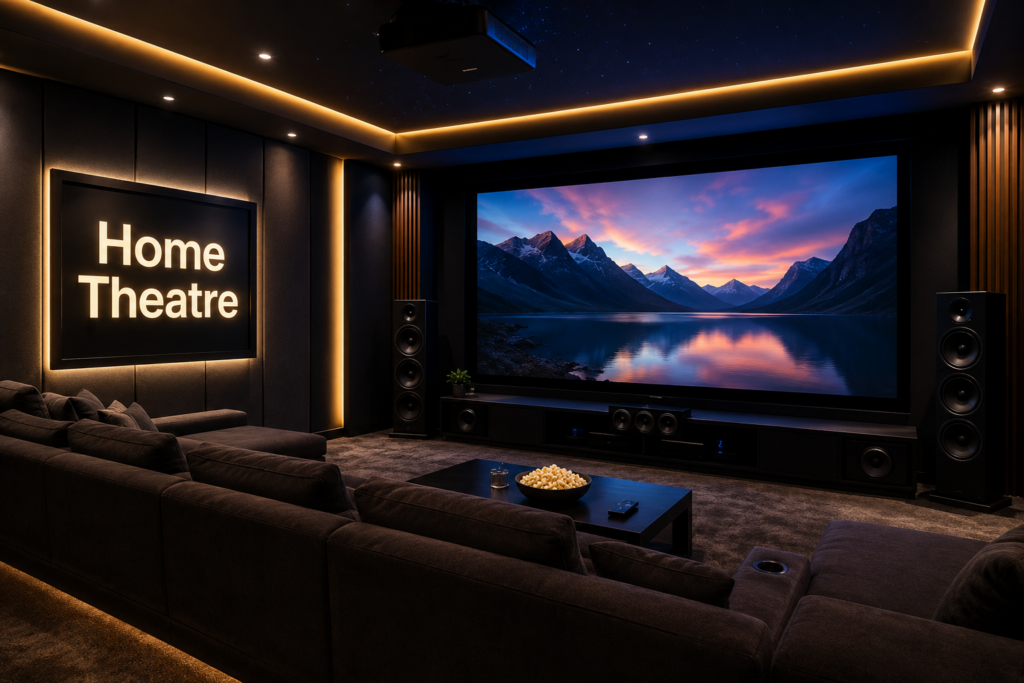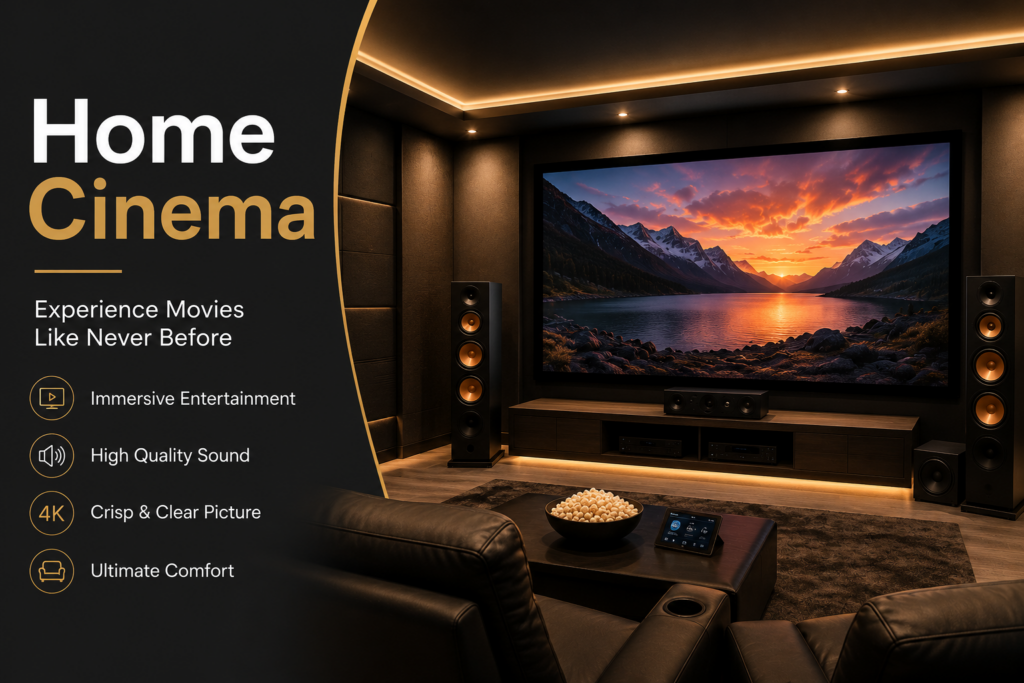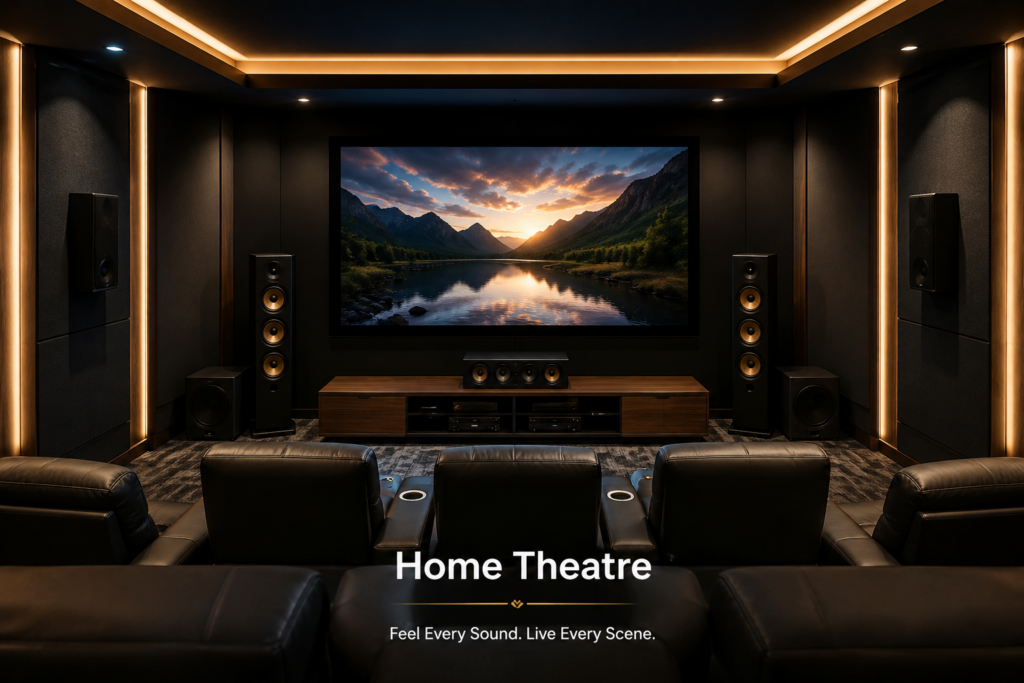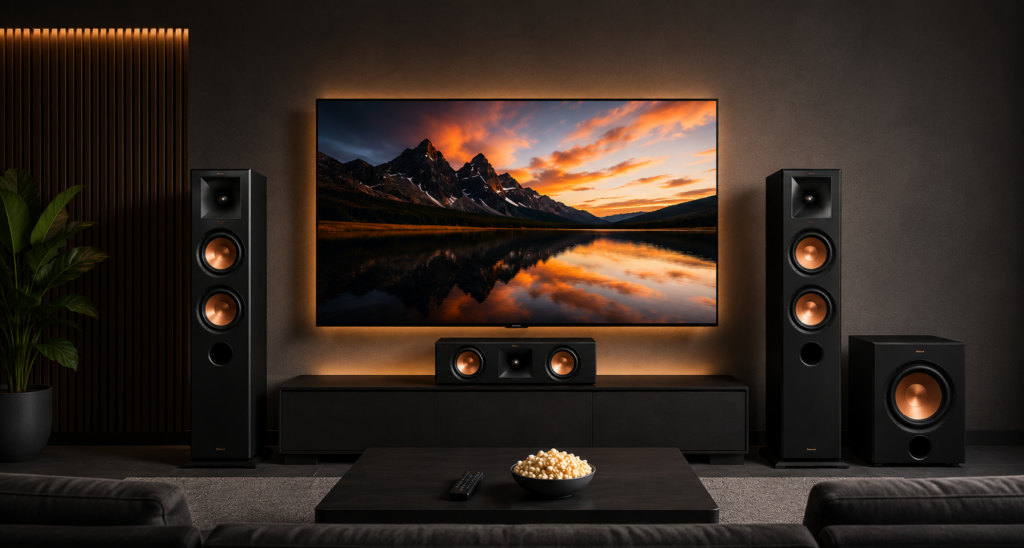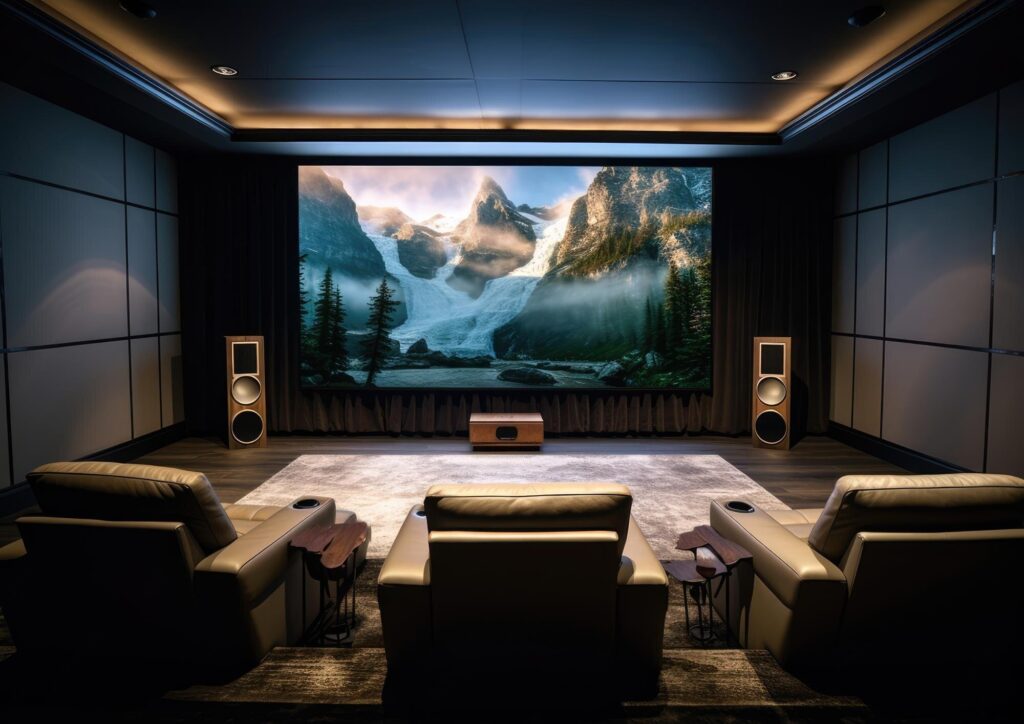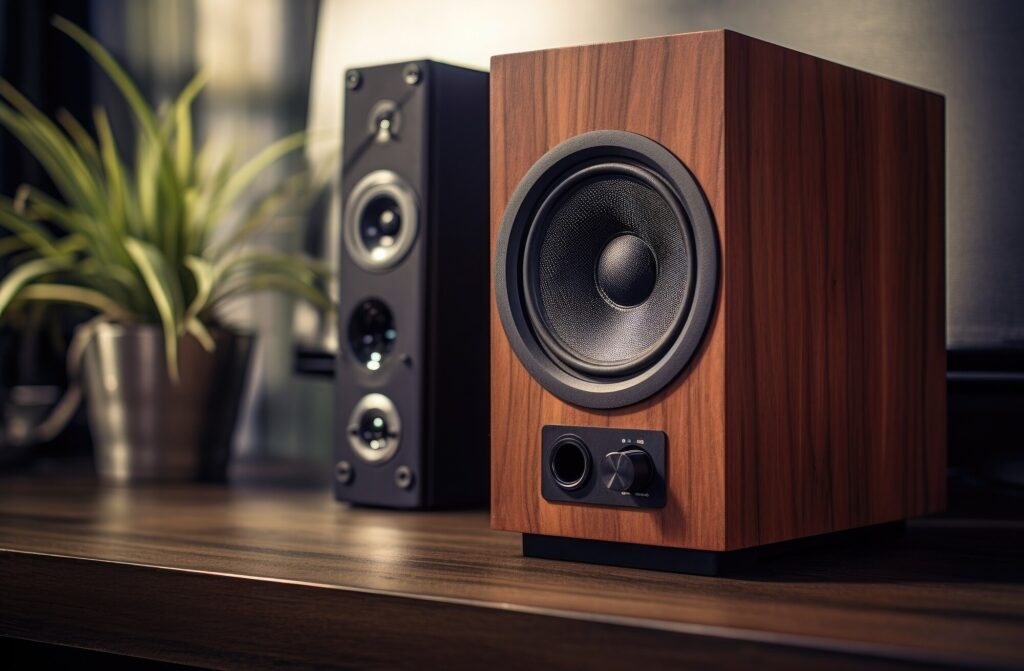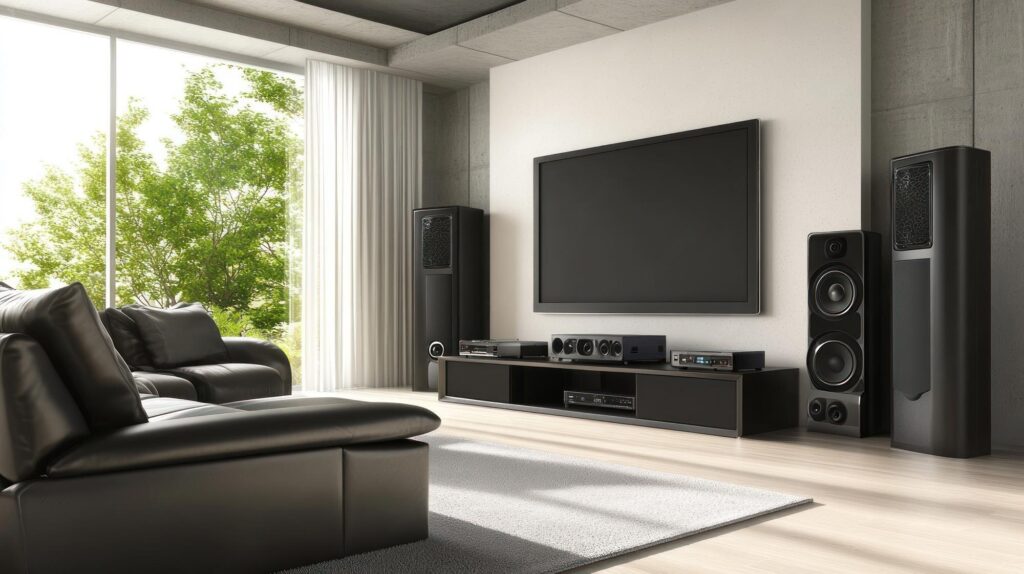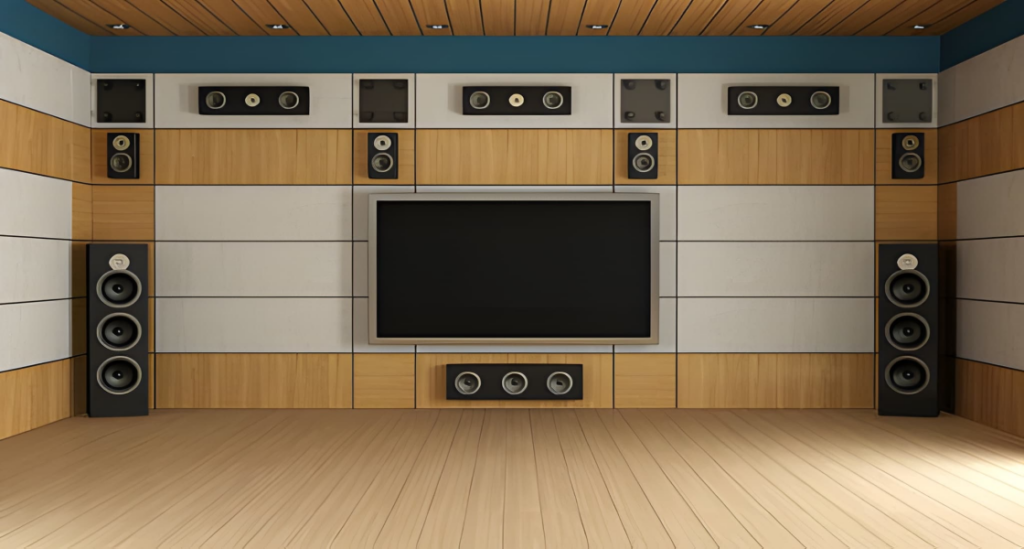

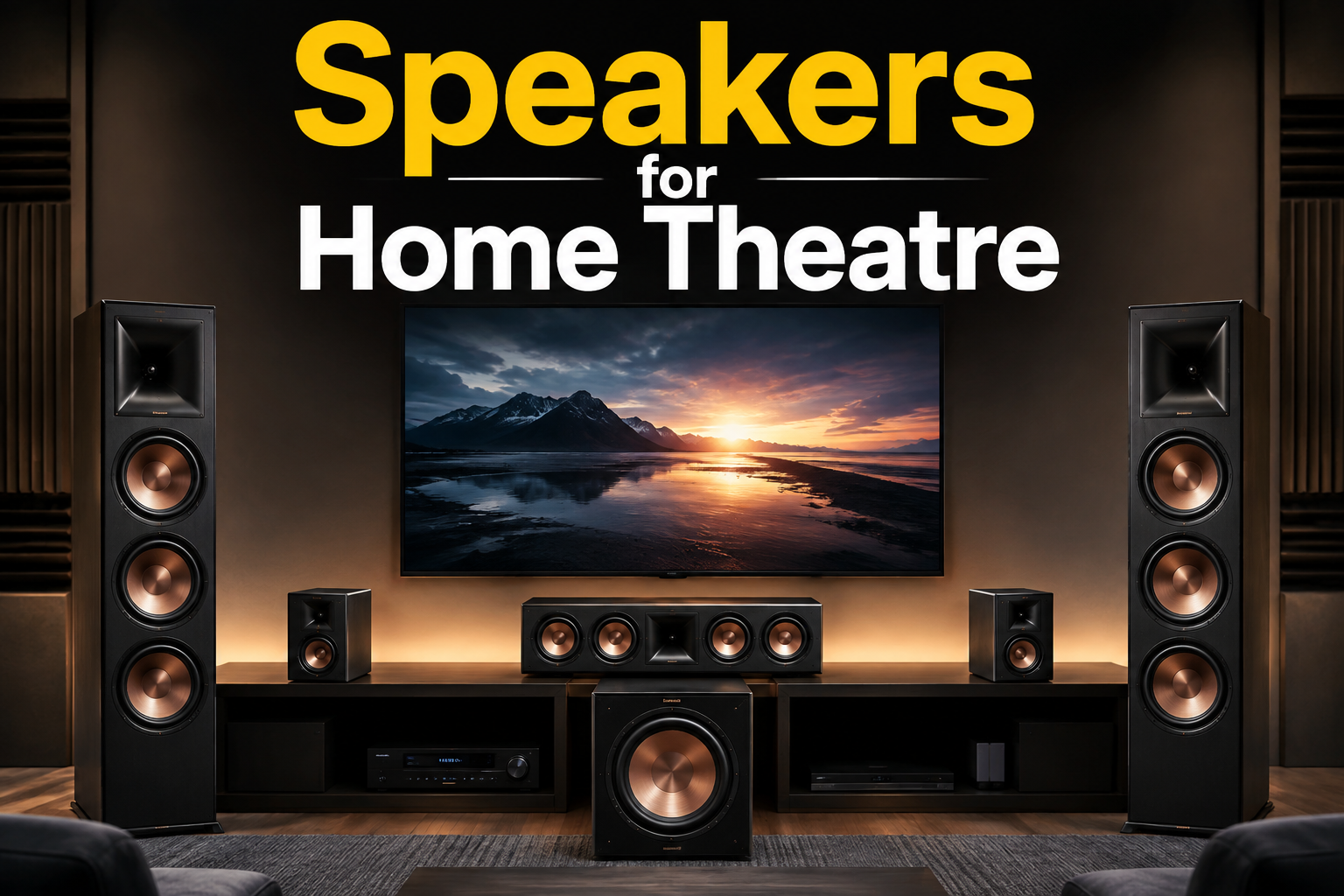
The list of the Speakers for Home Theatre features one for which it is very important to pay attention to the characteristics that can directly influence sound quality and listening comfort. The speaker’s look and influence are equally significant as its dialogue, music, sound effects and low frequency sounds.
Not all speaker models have the same specifications, so it may be easier to select the right one if you are aware of what to look out for. Whether it’s sound clarity or frequency response, power handling or construction quality, every aspect of a home theatre sound system is vital to its overall performance.
Sound Clarity Is an Essential Feature in Speakers for Home Theatre
One of the early features that should be looked at is sound clarity. Good Speakers for Home Theatre should give a natural sound of voices, music and effects without any distortion.
When talking about a film, clear sound is of particular importance. Background music or any loud effects in the soundtrack should not make dialogue unreadable.
Search for speakers with detailed vocals, smooth midrange frequencies, and clear high frequencies. With a balanced sound, you can hear all the small things without making the audio sound sharp or uncomfortable.
Frequency Response Matters in Speakers for Home Theatre
Another key characteristic to take into account is frequency response. It refers to the breadth of frequencies that a speaker can reproduce.
A good speaker will produce an even mixture of:
- Low frequencies for depth and impact
- Mid frequencies for dialogue and musical detail.
- High frequencies for clarity and fine audio details
When comparing Speakers for Home Theatre, don’t consider just the broadest frequency range indicated in the specs. Numbers are not the most important consideration for the quality and balance of the reproduced sound.
Power Handling for Consistent Speaker Performance
Power handling refers to the amount of electrical power a speaker can handle without having issues with performance. This feature is useful with the pairing of speakers and an AV receiver or amplifier.
The power of a receiver and the distance between the listener and the receiver are determined by the room size and the volume desired.
If listeners want to listen at a higher volume or a larger room, there is a good chance that they will appreciate the higher power handling. But the higher the speakers’ power rating, the better the sound is not guaranteed.
The objective is to determine Speakers for Home Theatre which are suitable to the amplifier powering them.
Sensitivity of Speakers for Home Theatre
Speaker sensitivity is a measure of how well a speaker will convert the power from an amplifier into sound. Typically stated in decibels (dB).
The higher sensitivity a speaker has, the less amount of power is needed to achieve a specified sound level. It can be helpful in choosing speakers for a system that has a limited amount of amplifier power.
Sensitivity is not a measurement by itself, but should be used in conjunction with other measurements such as power handling and impedance when comparing Speakers for Home Theatre.
Impedance and Equipment Compatibility
The technical attribute of impedance is important because it will influence how a speaker will respond to an amplifier or AV receiver.
When buying Speakers for Home Theatre, review what the impedance specifications are and ensure that it’s appropriate for the equipment you already have.
When it comes to compatibility, the amplifier and the speakers function efficiently with each other. Failure to adhere to this specification may result in a poor performance or in an unnecessary load on the amplifier.
Bass Response in Speakers for Home Theatre
A powerful bass can contribute depth and realism to a film’s soundtrack. However, making the loudest sound at the lowest frequency is not the only criteria for quality bass.
Good Speakers should have a controlled bass response which blends into the overall sound spectrum of the speaker in an harmonious manner.
Music can sound fuller and movie elements more realistic from a speaker with well controlled low frequency response, while dialogue is not drowned out.
Crystal-Clear Dialogue Performance
When assessing Speakers for Home Theatre, dialogue reproduction is a subject that needs to be given extra consideration. There is a significant amount of speaking in movies and TV shows, so voices need to be a good fit and easy to hear.
A good speaker should repeat speech sufficiently detailed and defined. Voices should not be too thin, muffled, or lost in the background noise.
The center speaker is particularly vital for a surround system setup, as it is usually used to play a considerable portion of the dialogue.
Wide and Balanced Soundstage
To make the sound more spacious and realistic, one needs a good soundstage. What should be heard are different elements rather than hearing the sound from a single point.
When well engineered and matched, Quality Speakers for Home Theatre can provide a richer, more solid Sound Stage.
This can be a very prominent characteristic in movies with extensive soundtracks, where music, dialogue, and effects alternate between channels.
Distortion Control
Distortion may lead to poor sound quality especially when played loud.
When choosing speakers be sure to choose models that keep the audio crisp at high volumes. The use of good driver construction and cabinet design can help to improve distortion control.
The goals are to create sounds which are sound and natural at varied listening levels, not just louder.
Driver Quality in Speakers for Home Theatre
One of the most vital parts within a speaker is the drivers. They transform electric signals into sound waves.
The higher frequencies are recreated by different drivers than the lower frequencies. For instance, woofers are typically used for the lower frequencies whereas tweeters are used for the higher frequencies.
Take note of the construction of the drivers and how they are integrated. Well designed drivers can help to produce smoother transitions between frequencies and better sound reproduction.
Build Quality and Cabinet Construction
The physical design of a speaker could also have an effect on its operation. A stiff, properly designed cabinet can help to minimize unwanted vibrations.
Inadequate cabinet design can cause extra resonance, which can impact the sound’s accuracy.
Build quality should be taken into consideration when comparing Speakers for Home Theatre, for this reason. Review the cabinet material, general build quality, driver mounting, terminals and cabinet finish.
A sturdy cabinet may also offer increased long-term reliability.
Crossover Design
The crossover is another property that you need to consider. It sends various frequencies to the right drivers in a speaker.
An effective crossover helps to make a good transition between woofer, tweeter and other drivers.
This can help to ensure that the mix is well-balanced, and that there are no obvious gaps or overlaps between the various frequencies.
The quality of crossover is an important factor to consider when comparing Speakers for Theatre, especially when it comes to multi-driver speaker designs.
Dynamic Range
Dynamic range is the range between loudest and softest sounds a speaker can effectively produce.
Good Speakers for Home Theatre must be able to deliver fine nuances and impactful sound effects without losing clarity.
This is particularly apparent in films. A low-key discussion can suddenly switch to a greater intensity level and louder voice. Changes can be reproduced more naturally by speakers with good dynamic performance.
Design and Finish
While technical performance is a top priority, the physical design of the Speakers for Home Theatre can also make a difference.
Home theatre speakers are typically visible, and so the size, shape, finish and overall look of the speaker will be compatible with the room.
Some models come in small units while others are bulky and large cabinets for more output. The perfect design will depend on your preferences, and the available space.
Key Features to Prioritize When Choosing Speakers for Home Theatre
There are a lot of specs to choose from and it’s hard to see which ones to focus on. Begin by describing the features which will impact your listening.
Prioritize:
- Sound clarity
- Balanced frequency response
- Suitable power handling
- Appropriate sensitivity
- Compatible impedance
- Controlled bass response
- Low distortion
- Quality drivers
- Strong cabinet construction
- Good dynamic range
These features are useful to keep in mind when looking at various Speakers models.
Why Feature Matching Is Important for Speakers for Home Theatre
Not all the best speakers will be the highest spec in each category. It’s how its features fit together that matters.
For instance, if a powerful Speakers for Home Theatre is used with the wrong amplifier, it may not sound optimum. Likewise, if the mid range and treble output are low, a speaker that has good bass response may not provide a balanced sound.
Feature matching contributes to uniformity of an audio system. Don’t disregard the speaker’s technical specifications as a whole but look at them as a package.
Conclusions
The best Speakers for Home Theatre will be clear, have a balanced frequency response, good power handling, efficient sensitivity, controlled bass, low distortion, good Drivers and a sturdy build.
Do not select speakers merely because they look nice or have the loudest power numbers, but rather by looking at what features are going to help them with sound reproduction. These specifications will help you compare models and find a speaker to match your audio needs.
If you’re planning to build a new home theatre system or upgrade your existing setup, Soundville Studio recommends considering these key factors to choose the right speakers for your home and enjoy rich, balanced, and immersive sound.
FAQS
What are the key features of Speakers for Home Theatre?
Some of the important features include sound clarity, frequency response, power handling, sensitivity, bass response and low distortion.
Why is frequency response important in Speakers for Home Theatre?
It is used to evaluate the ability of speakers to accurately repeat low, mid and high frequency sounds.
How important is speaker sensitivity?
Sensitivity refers to the efficiency of the speakers in translating the power of the amplifier into sound.
Should Speakers for Home Theatre have strong bass?
Yes, but bass should be controlled and balanced, not “over-loud”.
Does build quality matter in Speakers for Home Theatre?
Yes. Proper cabinet and driver design can enhance durability and sound quality.