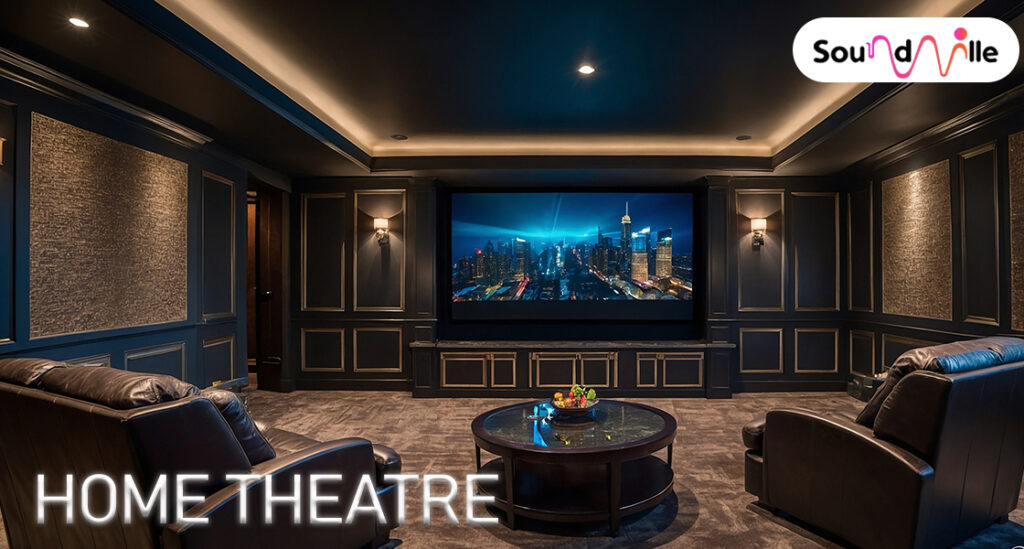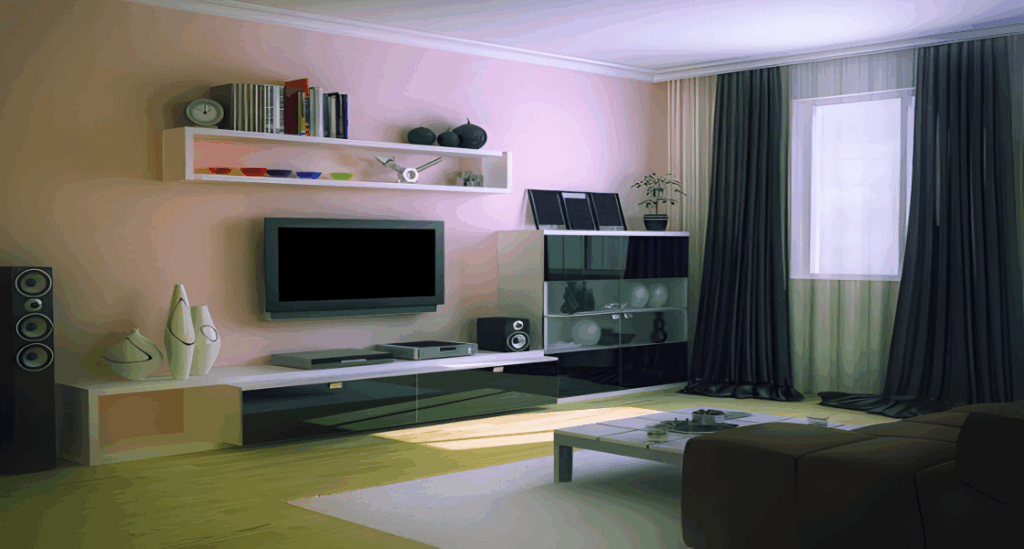



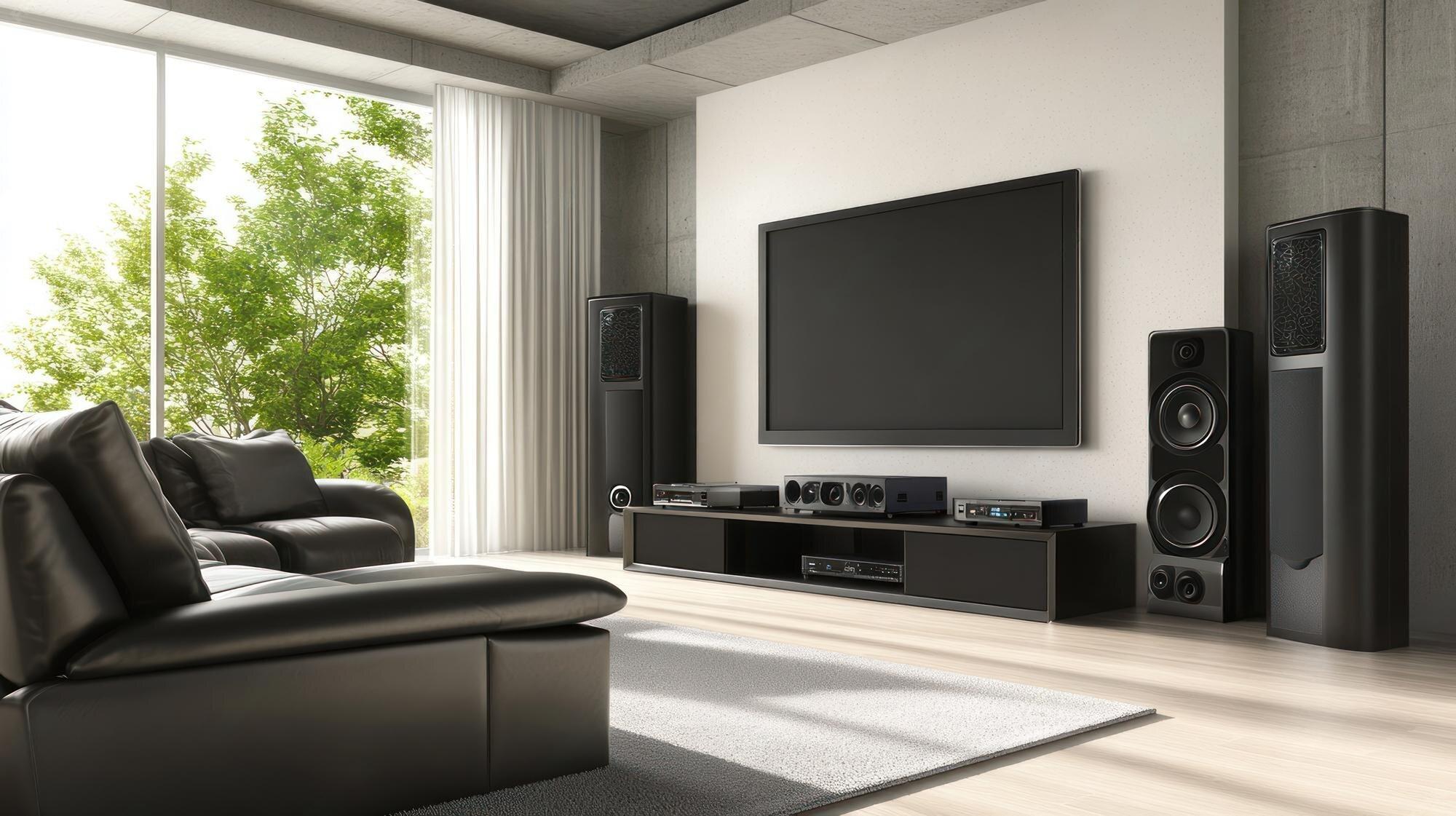
Home Theatre Speakers is one thing that will help in creating a cinematic environment at home. Modern displays provide an amazing visual effect, but sound is what helps one to be immersed in the experience. Home theatre speakers determine the level of reality and engagement in your entertainment by the small details of background sounds and fresh air as much as by the big scenes of action and pounding bass.
Here, in this all-encompassing blog, we are going to discuss all you need to know about Home Theatre Speaker; their types, configurations, components, specifications, where to place, acoustic, purchase, installation, and maintenance in the long run. This guide will help you make wise decisions without hesitation, whether you are renovating your existing system or you are developing a new home entertainment system.
What Are Home Theatre Speakers?
Home Theatre Speakers are fabrics that are constructed with special attention in order to achieve the ability to reproduce surround sound within a home. They differ in that they operate as a multi-channel system with other basic stereo speakers to produce a three-dimensional sound stage that resembles the sound volume found in theatres.
The right designed system can enable you to:
- Listen to realistic and natural conversations.
- Have directional surround effects.
- Enjoy deep, controlled bass
- Experience full-body sound effects.
- Get the perfect balance of sound at every frequency.
When appropriately set up, Home Theatre Speakers help to make watching a movie something compared to a spectacle in terms of the way the senses are used.
Why Sound Quality Is Essential in Home Entertainment
Most of the homeowners put a lot of money into the big screens and high-definition projectors, but they forgo sound. The best pictures would be flat and lifeless without good Home Theatre Speakers.
Sound contributes to:
- Emotional depth
- Spatial awareness in a real sense.
- Impactful action sequences
- Improved musical performance.
- Clear speech reproduction
Cinemas that are professionally built give more focus to audio since it brings immersion. The same thing will be true of your household. Home Theatre Speakers are of premium quality, and therefore, there is no chance you will miss the tiniest detail of a sound when you invest in them.
Main Components of Home Theatre Speakers Systems
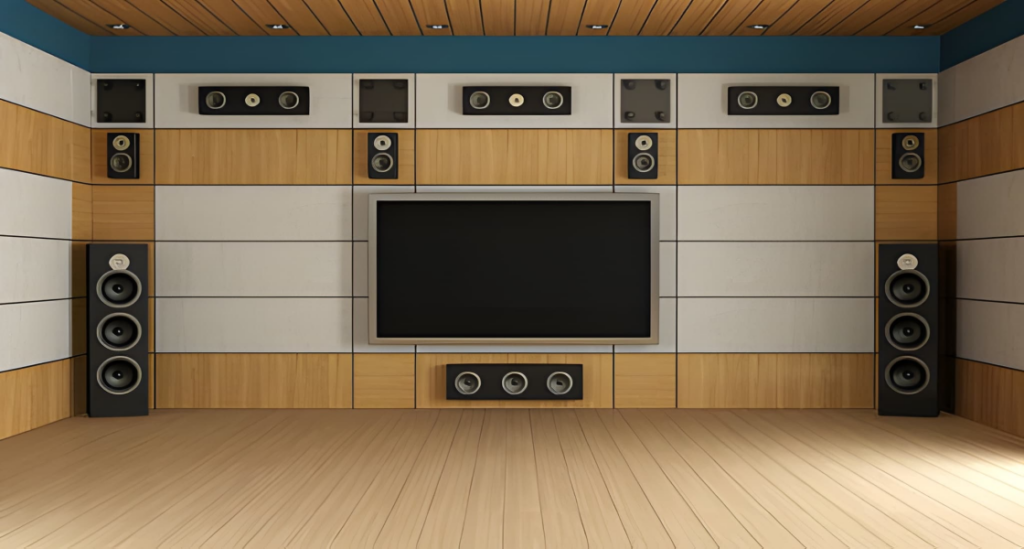
A complete system incorporates various kinds of speakers that deal with a particular task.
Front Left Speaker and Front Right Speaker.
These do music, background soundtracks and directional effects. They are the basis of your soundstage.
Centre Channel Speaker
There is proper dialogue clarity, and voices are in line with the screen by the centre speaker.
Surround Speakers
These are located next to, behind or in front of the seating space to bring ambience and movement effects.
Subwoofer
The subwoofer is used to respond to low frequencies like explosions, growling engines and low musical notes.
Height or Atmos Speakers
These are used with more complex systems to add the elements of sound vertically to give them a more immersive experience.
A combination of these features creates an effective Home Theatre Speakers system.
Popular Home Theatre Speaker Systems.
The various sizes of rooms demand various configurations of speakers. The following will be a useful comparison:
| Configuration | Description | Best For | Room Size |
| 2.1 | Two speakers + subwoofer | Entry-level setup | Small rooms |
| 5.1 | Five speakers + subwoofer | Standard surround sound | Medium rooms |
| 7.1 | Seven speakers + subwoofer | Enhanced surround experience | Large rooms |
| 5.1.2 | Five speakers + sub + two height | Basic immersive audio | Medium rooms |
| 7.1.4 | Seven speakers + sub + four height | Premium cinematic immersion | Dedicated theatre |
The correct configuration will assure you of balanced and room-filling sound out of your Home Theatre Speakers.
Technical Specifications You Should Understand
Knowledge of specifications assists in the choice of the appropriate system.
Frequency Response
Represents the sound range that a speaker is capable of making. Broader scope means increased clarity.
Sensitivity
It is measured in decibels (dB), which is used to determine the efficiency of the speaker in transforming power into sound.
Impedance
Impedance (measured in ohms) should match the AV receiver to ensure the best functioning.
Power Handling
Gives the amount of amplifier power that the speaker is safe to use.
Driver Design
The speakers can have woofers, tweeters and midrange drivers to get proper frequency distribution.
The right choice of Home Theatre Speakers based on the compatible specifications guarantees the quality distortion-free sound.
Floor-Standing vs Bookshelf Speakers
The decision between the two will be based on the expectations of space and audio.
| Feature | Floor-Standing | Bookshelf |
| Bass Performance | Strong | Moderate |
| Space Requirement | Larger footprint | Compact |
| Installation | Floor placement | Shelf or stand |
| Best Use | Medium to large rooms | Small rooms |
| Visual Impact | Premium look | Minimalistic design |
The two choices may be used successfully in a Home Theatre Speakers system based on layout and design choices.
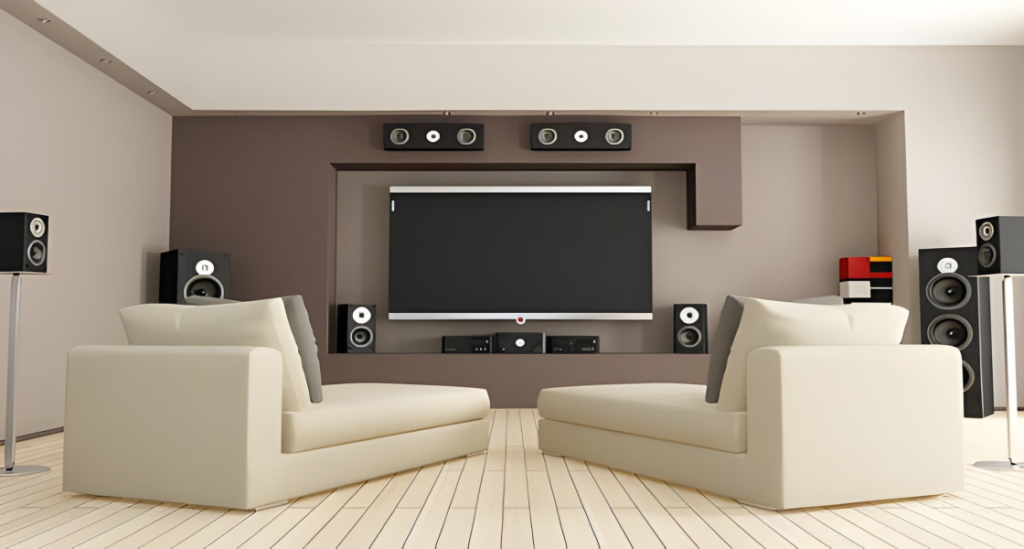
Proper Placement for Maximum Performance
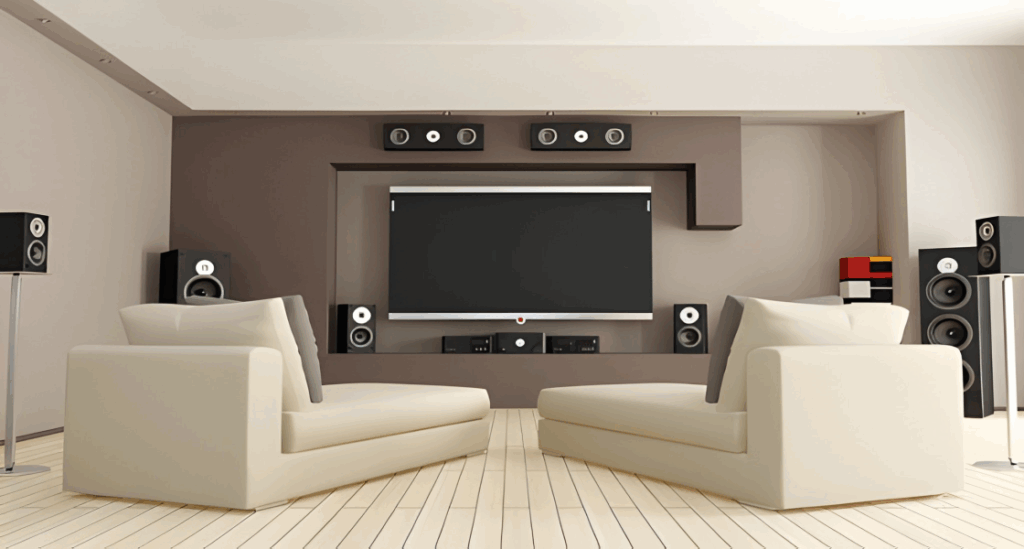
Proper positioning contributes greatly to the sound quality and thereby makes your system work at its optimum. Premium Home Theatre Speakers are placed well to produce balanced, immersive and realistic sound.
Front Speakers
Located at ear level, and is in a triangle shape having the main listening area in a triangle.
Center Speaker
Position either under or over the screen in order to have dialogue clear and in the proper position related to the visuals.
Surround Speakers
Mounting slightly above ear level on the sides or behind the seating area would be used to produce immersive surround effects that are immersive.
Subwoofer
Test corner placement or wall placement in an attempt to get a deep and controlled bass response.
Height Speakers
Mount overhead or have upward-firing modules to add vertical dimension and increase surround realism.
When appropriately aligned, Home Theatre Speakers will enable the realization of a natural, spacious and really immersive sound field.
Room Acoustics and Sound Optimization
Acoustics in the room have a great influence on performance. Reflections are made on the hard surfaces and sound is absorbed on soft materials.
To improve acoustics:
- Use carpets and rugs
- Install curtains
- Insert acoustic panels where a necessity occurs.
- It is not recommended to use speakers inside closed cabinets.
- Keep balance in positioning.
Tonal balance and clarity of Speakers- Home Theatre are optimized by Acoustic.
Wired vs Wireless Systems
There are wired and wireless systems available in modern systems.
Wired Systems
- Stable signal transmission
- Reliable performance
- Ideal in professional installations.
Wireless Systems
- Cleaner appearance
- Flexible placement
- Easier installation
Both of these choices have the potential of producing great results when combined with good Home Theatre Speakers.
Matching Speakers with an AV Receiver
Audio signals are fed into an AV receiver. Make sure that it is compatible, ensuring:
- Impedance rating
- Power output per channel
- Dolby Atmos or DTS support
- Room calibration features
Balanced pairing has maximum performance with Home Theatre Speakers.
Choosing the Right System Based on Room Size
| Room Area | Recommended Setup |
| Up to 150 sq ft | 2.1 or compact 5.1 |
| 150–300 sq ft | 5.1 or 5.1.2 |
| 300–500 sq ft | 7.1 |
| Above 500 sq ft | 7.1.4 or custom configuration |
To make sure that your Home Theatre Speakers will cover the sound evenly, choose the appropriate setup.
Benefits of Investing in Quality Home Theatre Speakers
Engaging movie experience.
Home Theatre Speakers make surround sound that produces a realistic sound and makes you feel that you are in the movie,a nd the sound is correctly directed, and it is deep.
Clear and Natural Dialogue
The quality systems also make sure that voices are clear and easy to hear, even when there is a loud scene.
Deep and Controlled Bass
Strong but harmonized bass puts emphasis on action scenes and depth to the music.
Enhanced Music Playback
An elaborated reproduction of sounds enhances the clarity of instruments and vocals.
Long-Term Durability
High-quality parts offer consistent performance over a long period of time.
Upgrade Flexibility
You can also increase your Home Theatre Speakers system as time passes with more channels.
Heightened Entertainment Value.
An effective sound system would enhance films, sports, and games, and make them exciting and fun to watch.
With good maintenance, Premium Home Theatre Speakers will give value for years.
Installation Process Overview
- Room assessment
- Speaker selection
- Placement planning
- Wiring and mounting
- Receiver configuration
- Calibration and testing
Home Theatre Speakers are installed by professionals, and they are left to perform optimally.
Maintenance and Care Tips
To maintain sound quality:
- Blow out dust on speaker grills.
- Avoid exposure to moisture
- Check the cable connection on a regular basis.
- Calibrate annually
- Avoid overdriving speakers
Home Theatre Speakers increases its life through routine care.
Common Mistakes to Avoid
- Ignoring room acoustics
- Incompatible choice of components.
- Improper speaker placement
- Undervalued or oversized speakers.
- Skipping calibration
These are the mistakes that can be avoided to protect your investment in Home Theatre Speakers.
Used Speaker Technology Trends.
The industry is also developing and evolving in:
- AI-based room calibration
- Slim architectural designs
- Enhanced driver materials
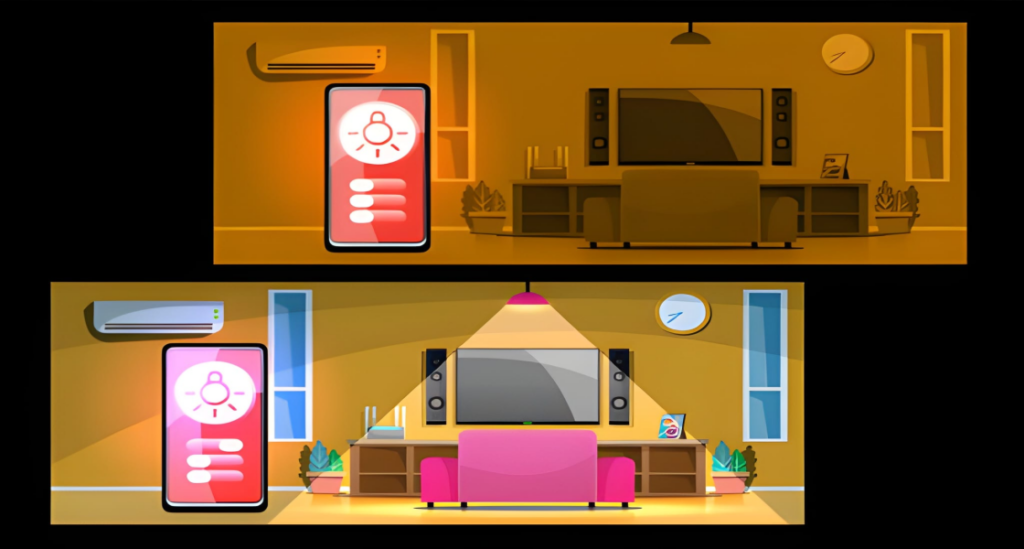
- Smart home integration
- Advanced immersive formats
Home Theatre Speakers is still enhancing its performance due to these inventions.
Why Choose Soundville
Experts can be of great help when it comes to choosing high-quality Home Theatre Speakers. Soundville focuses on consultations, design, and installation of high-tech audio systems, depending on the room types and preferences of the users.
Soundville will make sure that:
- Customized system design
- Accurate placement
- Seamless integration
- Ongoing support
The selection of the system with the help of experts ensures the best outcomes.
Conclusion
The key to a home entertainment system worth having is Home Theatre Speakers. They make the mere process of viewing an engaging and exciting experience with volume, brightness and immediacy. Knowing about configurations, specifications, placement methods, as well as acoustics, you can create a system that will perform extremely well in the years to come.
When you invest in good quality equipment, good installation, and professional advice, then you are guaranteed of great cinema reality in your Home Theatre Speakers. It does not matter whether you are creating a basic surround system or a whole theatre room; careful planning results in an overall memorable sound experience.
FAQs
Q1. What is the most desired beginner setup?
A 5.1 configuration is ba alanced surround and is very much recommended.
Q2. Do I need a subwoofer?
Yes, the subwoofer is also fulfilling the frequency range and adds impact.
Q3. How long do speakers last?
Home Theatre Speakers that are of good quality could last up to 10-20 years under the right maintenance.
Q4. Can I upgrade my system later?
Yes, there are more channels and immersive expansion on the majority of systems.
Q5. Do you think wireless speakers are reliable?
Current wireless solutions are good, and wired ones are still favoured on bigger installations.
Q6. What is the significance of calibration?
Calibration provides equal distribution of sound and proper surround effects.
Is it possible to have immersive setups in small rooms?
Yes, there are small immersive sizes that can fit smaller spaces.