

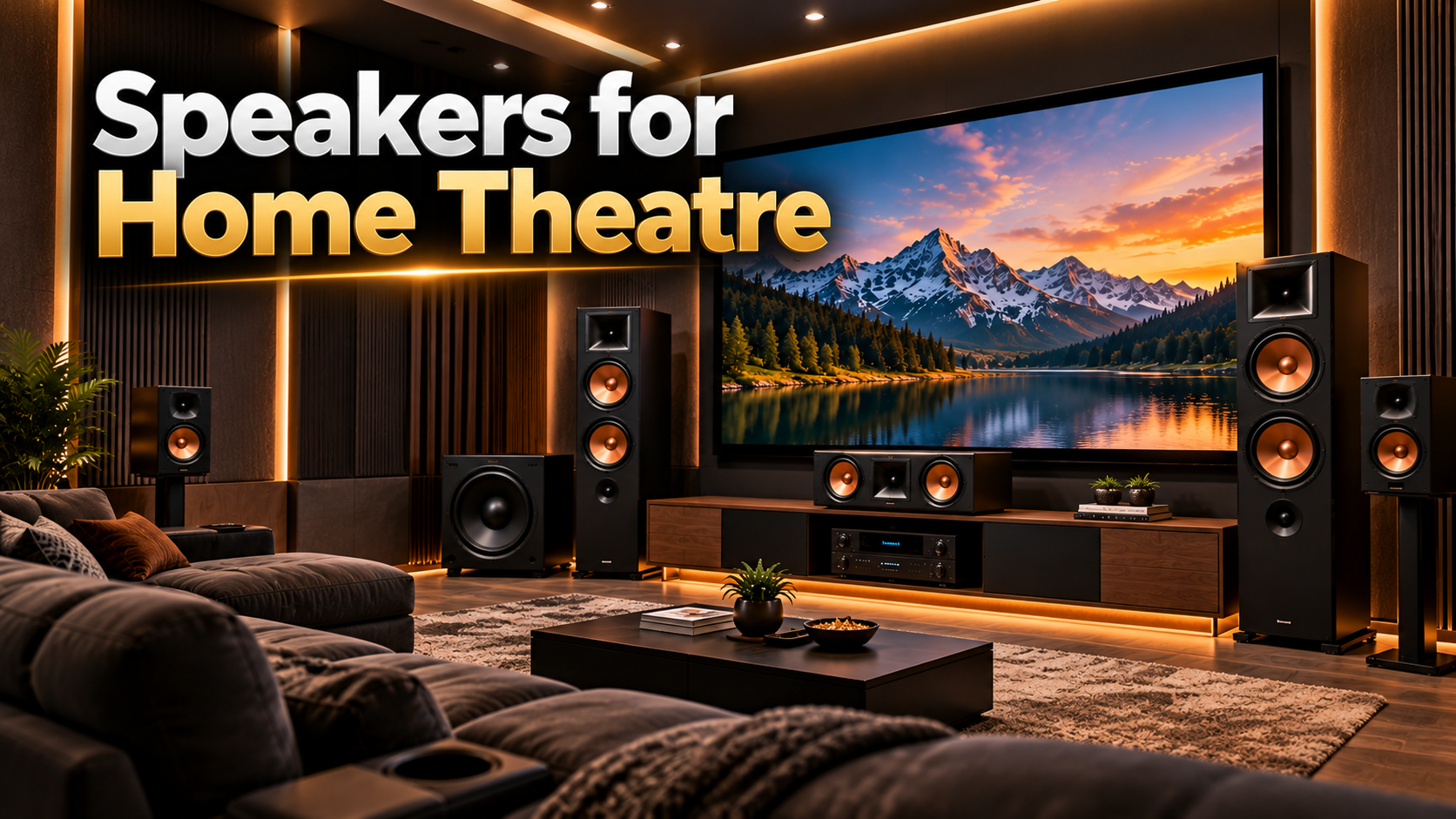
A great home theatre doesn’t just need the biggest and most comfy chair and screen. Sound is king for movies, music, sporting events and gaming. Clear speech, thumping bass, realistic sound effects and one’s own sense of being immersed can make even a modest lounge room become a total fun palace. Discover the best Speakers for Home Theatre to make your perfect soundscape. How does a home theatre speaker system work?
A Speakers for Home Theatre project the various components of a soundtrack – like subdued dialogue to explosive action scenes. The way sound is heard depends on the clarity, naturalness, quality and positioning of speakers in relation to one another and the entertainment system – things you can control with a good speaker layout plan.Is here to assist home owners discover home entertainment choices that are appropriate for their rooms and choices. When equipped with the ideal devices and some planning, you can make the most of surrounding sound, comfortable seating, and an immersive film experience in the house.
Understanding the Importance of Home Theatre Speakers
Speakers for Home Theatre take the audio signal and turn it into the sound heard when watching a movie or listening to music. Several speakers or sets of speakers may be used for dialogue, music and sound effects in certain directions, and low frequency sounds. Used together, the sound can be more immersive.
Have better clarity with dialogue, enhanced ambient sound reproduction, and a more detailed musical performance with great quality of Speakers for Home Theatre . Please note that the music quality depends on some factors like room environment, speaker placement, amplifier as well as the source of content.
Different Types of Speakers for Home Theatre
Every speaker type serves a particular purpose. Understanding these differences makes it easier to choose a configuration that meets the needs of a home entertainment space.
1. Front Speakers for Detailed Audio
Front Speakers for Home Theatre play most of the primary sound track, including music, effects and other sounds. They are typically set on each side of the television or projector screen.They’re positioned to balance the soundstage in front of the listener. Front speakers should sound good throughout the intended listening area and be compatible with the other components.
2. Centre Channel Speakers for Clear Dialogue
A centre channel Speakers for Home Theatre is often employed in a home theatre system of multiple channels. It is responsible for capturing a majority of what is being said and elsewhere of the centrally located sounds, and assists voices appear as if they are originating from the display.
If you are a film enthusiast and want music or heavy sound effects within a scene not to have any impact on the clarity of your discussions then this speaker is perfect. It needs to be placed near the TV or projector in the correct elevation and angled for maximum efficiency.
3. Surround Speakers for Immersive Sound
Surround Speakers for Home Theatre bring real world ambience and directional effects that enhance the experience of supported movie soundtracks. This can include sounds of rain, crowd noise, passing cars or activity outside the front of the room.Proper placement contributes to enhanced sense of space and convinces the brain that it’s experiencing multiple channels. The quantity and distribution of these speakers will vary depending on the format of the audio, as well as the capabilities of the receiver.
4. Subwoofers for Deep Bass
The subwoofer produces low-frequency audio that helps emphasize punch and punch in music, movies, and games. It can help create more powerful sound effects and helps the other Speakers for Home Theatre bass.The placement in the room will affect bass very much. Try on different locations and adjust that, the bottom will be reduced.
How to Choose the Right Home Theatre Speakers
A good Speakers for Home Theatre system can be chosen not only by your budget or the most expensive ones but also based on the number of rooms, matching equipment, sound you prefer and the budget to be spent.
Consider the Room Size
The size of the room and where the Speakers for Home Theatre will be placed will play into what speakers to use. Small rooms can be used with smaller speakers, which won’t be loud, but will also not overpower the room. Larger rooms will need to be able to fill the room with sound, which larger, more powerful speakers are going to do.Before choosing equipment, consider furniture placement, ceiling height, and distance from the screen to the seating area.
Check Power and Compatibility
Speakers for Home Theatre should be compatible with your AV receiver/amp. Impedance, recommended amplifier power, sensitivity and supported connections are all key features.Proper equipment matching, not only prevents the possible trouble, but also ensures the power supply of the system is reliable. For example, buy equipment according to the manufacturer’s advice rather than on the basis of power.
Focus on Sound Quality
Speakers for Home Theatre Specifications are important, but listening preferences are equally so. Some want fidelity in their speech, whereas others may want deep bass or the most natural reproduction of music.
If you have the opportunity, try to listen to all the options available before you buy. Test out how they handle movies, music and general television programming rather than trying them out on just one type of output.
Evaluate Placement Requirements
Think about the space where you’re going to place the speakers (one speaker or more?). Wall mounted speakers for Home Theatre , bookshelf speakers, floor standing speakers and ceiling speakers all need different amounts of space.A good set up should enable the sound to be heard without any obstructions such as furniture.
Plan for Future Upgrades
Some Speakers for Home Theatre owners like to get a basic setup and add to it when they have more equipment. By selecting a kit that will work together and planning your cable runs ahead of time you will be able to expand your system in the future.For instance, a standard stereo setup can be upgraded to include a centre speaker, surround speakers or a subwoofer if the equipment to which it is connected allows this sort of setup.
Comparison of Home Theatre Speaker Types
The following table explains common speaker types and their typical applications.
| Speaker Type | Primary Function | Suitable Application |
| Front speakers | Main soundtrack and music | Everyday television and movie viewing |
| Centre speaker | Dialogue and central audio | Clear conversations in movie scenes |
| Surround speakers | Environmental and directional effects | Immersive multichannel entertainment |
| Subwoofer | Low-frequency sound | Deeper bass and cinematic impact |
| Height speakers | Vertical audio effects | Compatible immersive surround formats |
| Bookshelf speakers | Compact, full-range audio reproduction within their capabilities | Smaller rooms and flexible placement |
| Floor-standing speakers | Main audio reproduction with a larger cabinet design | Rooms with more floor space |
The ideal combination depends on the room, receiver capabilities, content, and personal preferences. Not every home needs every speaker type.
Speaker Placement for Better Sound Quality
Even good equipment may perform poorly when speakers are positioned incorrectly. Careful placement helps improve clarity, sound direction, and consistency.
Create a Balanced Front Soundstage
Place the left and right front Speakers for Home Theatre on either side of the display, preferably towards the primary listening area, keeping the left and right speakers fairly symmetrical around the screen.The centre speaker should stay near the display so that sound looks directed to the people and activity on the screen.
Position Surround Speakers Carefully
Arrange surround Speakers for Home Theatre in the best position for your selected format, following the advice of the manufacturer and avoiding areas where furniture, curtains or cabinets completely block the signal.An installation specialist review can potentially guide you on best placement if the room is odd shaped.
Adjust the Subwoofer Location
Low frequency Speakers for Home Theatre are highly reflective off of room bounds. A subwoofer in one corner may sound more powerful than a subwoofer elsewhere but this depends upon the room.
Try out a handful of actual positions and then search for the low even bass rather than choosing location by appearances.
Consider Room Acoustics
Hard flooring, Speakers for Home Theatre bare walls and large glass areas may reflect sound, leading to clarity issues. Rugs, curtains, soft furnishings and appropriate acoustic treatment can all help to absorb unwanted reflections.We do not intend to do away with all the reflections, simply to create a really comfortable and a balanced listening environment.
Professional Home Theatre Solutions
Selecting equipment just on the basis of price: The cheapest equipment may not be suitable for the room and the more expensive pieces of equipment might have something that is more of a luxury than a necessity.If electrical and technical details are not respected: The speakers and the amplifier should be compatible.
If they’re located at the wrong positions, speakers for Home Theatre are likely to reduce the sharpness of the noises and overall make them seem less believable.For multi-channel, then the wrong centre or position may not hear clear speech. Playing the subwoofer volume too high: All that bass will be heard, voice, music detail, etc. After install, speaker levels, distances and options available on the receiver should be set.
Conclusion
Speakers for Home Theatre are essential for delivering crisp, full, immersive entertainment. Properly matched front, centre, surround and bass speakers are critical to how viewers will hear speech, music and effects.This shouldn’t be merely down to specifications. Room measurements, listening taste, matching to the amplifier, speaker placement and acoustics all play a part.
If you need help with planning, Speakers for Home Theatre has the necessary expertise to help you create an attractive and functional space for your setup to entertain guests. Soundville Studio can assist you to determine the right setup that is suitable to your needs so you can have the ideal home theatre experience.
Frequently Asked Questions (FAQs)
1. Which speakers are best for a home theatre?
The right option varies based on the size of the room, the budget, the listening preferences and what the sound is used for. Selecting the right combination of front speakers, a centre channel, surround speakers, and a subwoofer will create an immersive audio experience.
2. How many speakers are needed for a home theatre?
A simple stereo system has a pair of speakers. 2.1 systems include a subwoofer. Typical 5.1 systems have 5 main speaker channels and 1 subwoofer. Larger systems may have more speakers such as multiple surround speakers or height speakers.
3. Are surround speakers necessary for better sound quality?
Surround speakers are not strictly necessary, but can provide directional effects for support content. Stereo or 2.1 can be enough for a few people in a small room.
4. Does room size affect speaker selection?
Yes. Room size, ceiling height, seating distance and placement of furniture can affect the size and output of the speakers, as well as where you place the speakers. Proper selection of the equipment relative to the room can help maintain listening consistency.
5. Where should home theatre speakers be placed?
Front Speakers for Home Theatre are usually placed to the left and right of the display and the centre speaker close to the screen. The surround and height speakers should be installed as per the chosen format and the manufacturer’s advice.