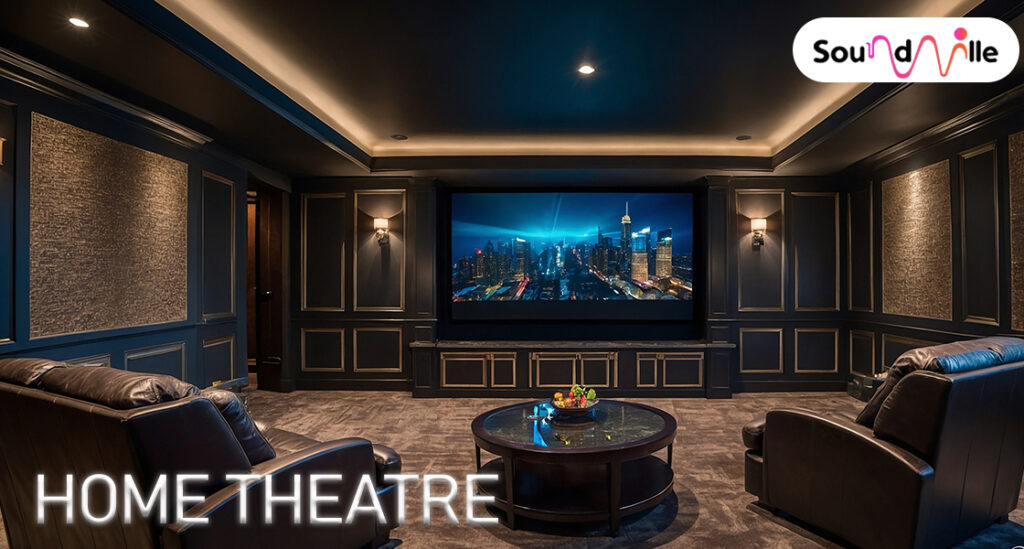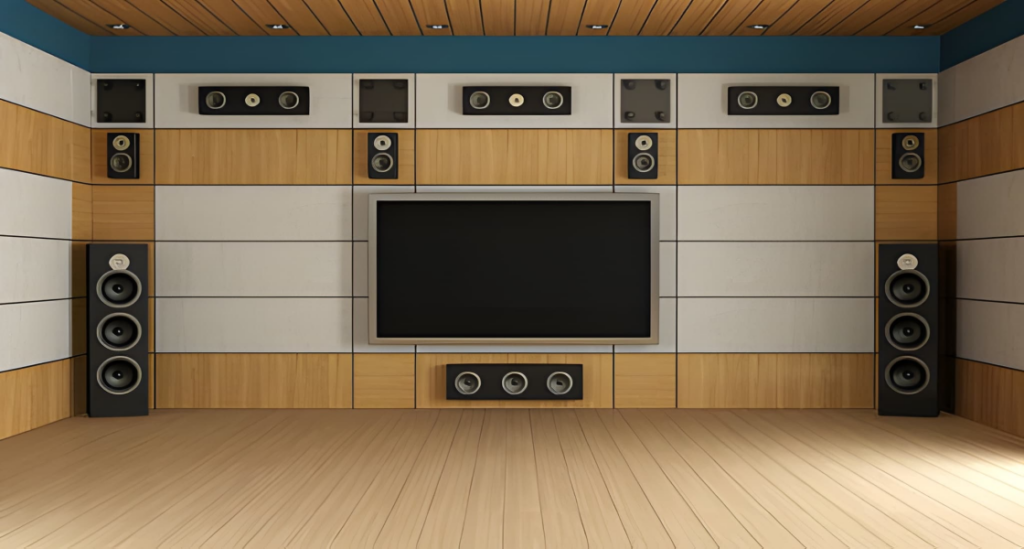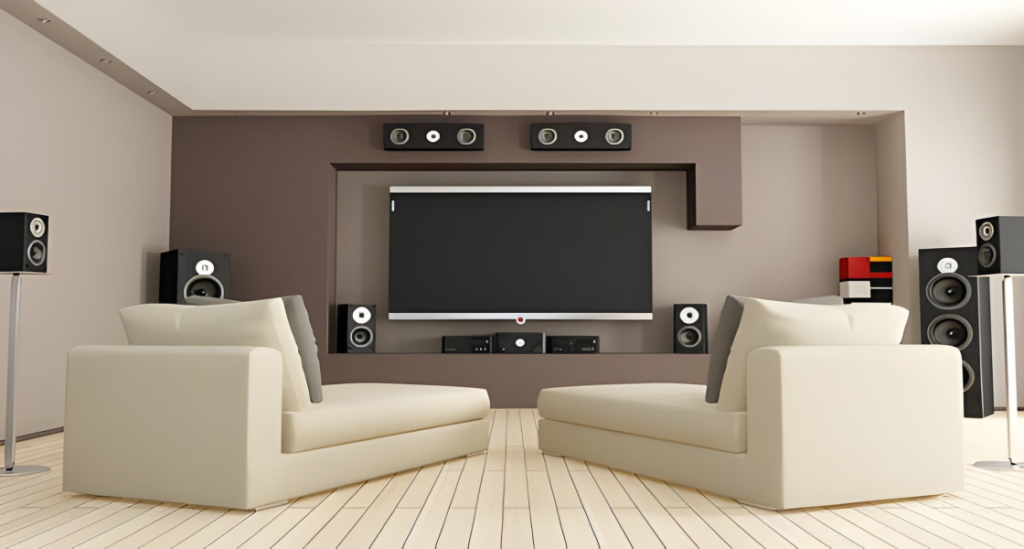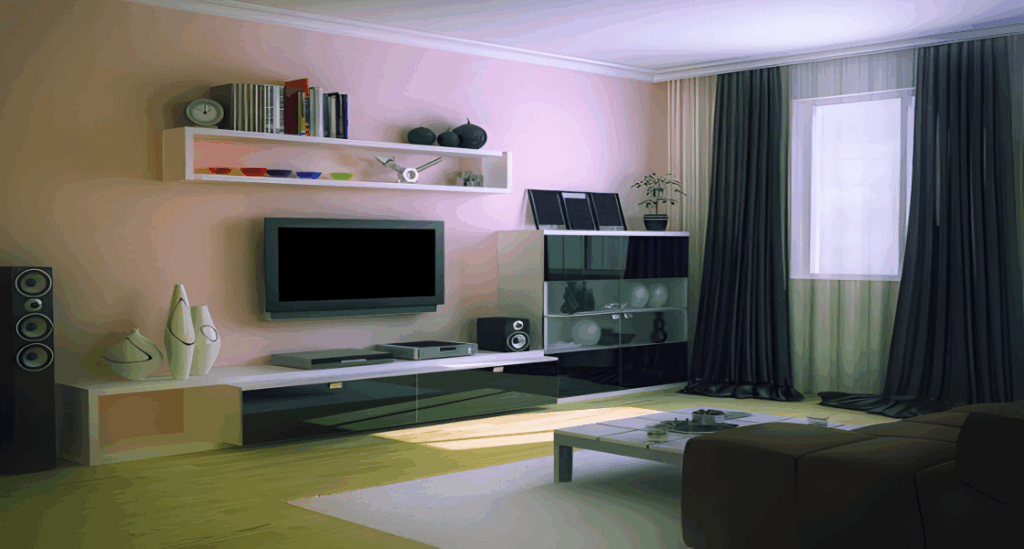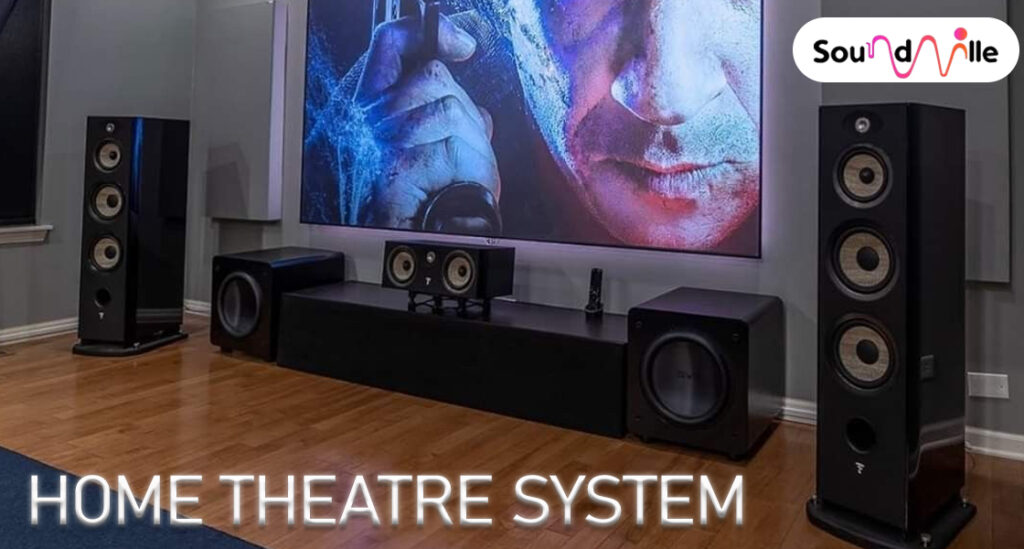



A Home Theatre System is meant to provide the full picture of a cinema-like sound in your house. This system also uses several speakers and a subwoofer instead of relying on a regular TV speaker, which tends to provide low-quality and flat audio. It can be movies, streaming web series, listening to music or playing. A Home Theatre System makes all the sounds more realistic and involving. It separates the dialogue, background music, and sound effects into various channels, and thus you can clearly hear every detail in all directions. Having such functions as surround sound, high bass, and intelligent connection, it turns your living room into an entertainment centre. Getting the appropriate set not only increases the sound quality but also makes you enjoy your entire home viewing experience.
What is a Home Theatre System?
A Home Theatre System is a home audio technology, a multi-speaker system that emulates the sound experience of a movie theatre that is located in a home setup. The sound generated by a Home Cinema is distributed by many speakers instead of just one, as is the case with regular television speakers.
Generally, a Home Theatre would consist of:
- Left in front and right front speakers
- A centre channel speaker
- Surround speakers
- A subwoofer
- An AV receiver
These elements combine to create surround sound. Watching a movie, the dialogue is delivered via the centre speaker, background music via the front speakers, surround effect via the rear speakers and deep bass via the subwoofer. This division gives a three-dimensional and enveloping audio space.
Modern Home Theatre systems installation caters to the current sound technology like Dolby Digital, DTS, and Dolby Atmos. The formats separate audio into various channels, and accurate positioning of sound is guaranteed. Consequently, you are able to hear the sound travelling in all directions and above and behind you, like in a real theatre.
Why a Home Theatre System is Important Today
The way entertainment was done many years ago has been transformed dramatically. Home entertainment has never been as popular as it is with the increased use of streaming services, smart TVs, and gaming devices. Nevertheless, the most appropriate visual materials are incomplete without appropriate sound support. Home Theatre System is the solution to this issue because it improves the quality of sound in several aspects.
- Cinematic Experience, At Home
Home Theatre brings to your living room theatre-quality audio. All sounds are more detailed and effective. - Immersive Surround Sound
The reason is that, unlike stereo speakers, a Home Cinema has the capability of surround sound, and therefore, scenes become believable. - Improved Dialogue Clarity
The home theatre system has centre channel speakers that make dialogue clear even in the most intense scenes. - Deep and Powerful Bass
Home Cinema Subwoofers recreate the sound that cannot be reproduced by normal speakers because of its low frequency. - Better Gaming Experience
A Home Theatre is very beneficial to gamers, as positional audio improves the aspect of realism and reaction time. - Enhanced Music Playback
A quality Home Cinema is more likely to bring out music that is richer and better balanced.
Types of Home Theatre System
Home Theatre configurations are of various types that are available in the market. It depends on your choice based on the size of your room, budget, and tastes.
- 1 Channel Home Theatre System
A 2.1 Home theatre has two speakers and a subwoofer. It is not only applicable to small rooms but also at the entry level. Although it does not give complete surround sound, it has much better sound than TV speakers. - 1 Channel Home Theatre System
A 5.1 Home Theatre comprises five speakers and one subwoofer. This is the most widespread type of home setup. It provides real surround sound and is best suited to the medium-size room. - 1 Channel Home Theatre System
A 7.1 Home Theatre will add another two surround speakers in order to have a closer sound positioning. It is suitable to large areas. - Dolby Atmos Home Theatre System
Dolby Atmos Home Theatre has height channels that produce a three-dimensional sound. The audio is capable of moving over and around you. - Wireless Home Theatre System
A wireless Home Theatre eliminates messy cables between speakers using WiFi or Bluetooth. It is convenient and contemporary.
Main Components of a Home Theatre System
In order to enjoy the functionality of a Home Cinema, it is important to know the elements of a Home Theatre.
- AV Receiver
The AV receiver is the heart of a Home Theatre, which provides the control unit. It receives and processes audio signals, which it sends to speakers. - Front Speakers
The initial sound effects and music are provided by these speakers. - Center Speaker
The clarity of the dialogue in a Home Theatre System is provided by the centre speaker. - Surround Speakers
The speakers generate the effects of immersion on the flanks and the back sides. - Subwoofer
The subwoofer gives the movie and music a sound that impacts the deepest bass. - Amplifier
Outer amplifiers are also used to increase the power output of an advanced Home Cinema.
How Does a Home Theatre System Work?
A Home Theatre System operates by converting audio signals and sending the signal to various speakers in order to produce a surround sound. A simplistic point-wise explanation is given below:
- Input Signal Reception
Audio and video data are sent to the system by a source device, e.g., smart TV, Blu-ray player, gaming console, or streaming device. - Audio Decoding
The AV receiver decrypts audio formats, such as Dolby Digital or DTS and breaks the sound into several channels. - Signal Distribution
All the channels that have been decoded are attached to a particular speaker. As an example, the dialogue is sent to the center speaker, whereas the background effects are sent to the surround speakers. - Amplification Process
The amplifier or receiver amplifies the audio signals so that it can be able to drive the speakers effectively without distortion. - Speaker Output
Certain sounds are reproduced by different speakers:- Music and main effects are operated by the front speakers.
- The character that speaks is the centre speaker.
- Ambient effects are created by surround speakers.
- Deep bass is produced by a subwoofer.
- Surround Sound Effect
Since there is no centre of seats, the sound is directed naturally to other directions, and this makes it appear more like a theatre.
This makes the Home Theatre System provide layers of sound and make it realistic.
Key Features of Home Theatre System
| Feature | What It Means | Benefit |
| Surround Sound (2.1 / 5.1 / 7.1) | Various speakers were distributed within the room | Creates cinema-like sound |
| Subwoofer | Speaker for deep bass | Powerful and solid low pitches |
| AV Receiver | Main control unit | Oversees and distributes sound to speakers |
| Dolby / DTS Support | Advanced sound technology | Clear and immersive audio |
| HDMI ARC | TV single cable connection | Easy setup and better sound |
| Bluetooth / WiFi | Wireless connection | Stream music easily |
| High Power Output | Strong sound performance | Suitable for big rooms |
| Room Calibration | Auto sound adjustment | Balanced sound in your room |
| Expandable System | Add more speakers later | Upgrade anytime |
The best thing is to select a Home Theatre System with more features, as this guarantees the improvement of performance in the long run.
How to Choose the Right Home Theatre System
The choice of the perfect Home Theatre should be planned.
- Room Size: Correlate the Home Theatre System setup and room sizes.
- Budget: Establish a price that is quality and affordable.
- Usage Purpose: In the case of movies and sports, surround sound is important. In the case of music, concentration is on balanced output.
- Installation Space: Make sure that you have clearance of where you can place speakers.
- Brand Reliability: Select reputable brands such as Soundville in a bid to find quality products and support.
Step-by-Step Home Theatre System Setup Guide
Installation is very important to provide optimum performance.
- Step 1: Setting up /Mounting Front Speakers
Put them at ear level and at an equal distance from the TV. - Step 2: Install Centre Speaker
It should be placed either below or over the television. - Step 3: Install Surround Speakers
Place them in the back part of the sitting place. - Step 4: Connect Subwoofer
Install it in a position close to a wall to respond to bass better. - Step 5: Connect AV Receiver
HDMI cables are used to transmit high-quality signals. - Step 6: Calibrate System
Perform automatic calibration where possible.
A properly set up Home Cinema gives the maximum sound clarity and impact.
Common Mistakes to Avoid
- Ignoring room acoustics
- Overpowering small rooms
- Incorrect speaker height
- Skipping calibration
- Choosing only based on price
These mistakes can be avoided, and it will enhance the efficiency of your Home Theatre System.
Maintenance Tips for Long-Lasting Performance
To keep your Home Theatre System:
- Clean speakers regularly
- Prevent the accretion of moisture and dust
- Check cables periodically
- Install new software when necessary
- Make sure that it is properly ventilated
- A good home theatre has a long life.
Home Theatre System vs soundbar
| Feature | Home Theatre System | Soundbar |
| Surround Sound | True multi-channel | Simulated |
| Bass Output | Powerful | Moderate |
| Customization | Expandable | Limited |
| Setup | Detailed | Simple |
| Immersion | High | Moderate |
An HTS provides a better immersion than a soundbar.
Advantages of Home Theatre System installation
- Audio experience in the workplace
- Higher quality of entertainment
- Improved family bonding
- Enhanced property value
- Entertainment investment in the long-term
A Home Cinema is emotional and practical.
Future Trends in Home Theatre System Technology
The Home Theatre System market is still in the process of evolution. Emerging trends include:
- Sound optimization based on AI
- Complete wireless speaker systems
- Smart home integration
- Compact modular designs
- Voice-controlled systems
These innovations are making the Home Cinema efficient and user-friendly.
FAQs
Q1. Which Home Cinema is the most suitable for small rooms?
A 2.1 or 5.1 Home Theatre is suitable for small spaces.
Q2. Does Dolby Atmos have a place in a Home Cinema?
There is an optional Dolby Atmos Home Theatre that offers a better level of immersion, however.
Q3. Is it possible to attach a Home Theatre System to a smart TV?
Yes, the models of Home Theatre, most of which do support HDMI ARC or optical connection.
Q4. How much wattage is ideal?
Select a Home Cinema depending on the size of the room and not the maximum wattage.
Q5. Is there a better recommendation between wireless and wired?
A wireless home theatre is convenient, and the wired system can be a little more stable.
Conclusion
The Home Theatre System is the best answer to making your entertainment system at home into a cinematic experience. It will complement everything in movies, music, gaming, and sports, with the level of immersion of surround sound and the depth of the bass performance. With the knowledge of configurations, components, features and installation methods, you will be assured of choosing the best Home Theatre to fit in your space. By spending a good amount of money on a Home Cinema, one is guaranteed satisfaction and high-quality sound output in the long run. Considering the correct installation and maintenance, your system from Soundville will keep on generating excellent audio for many years to come.